One form replaces the calls you'd make to find a furnace pro.
A furnace that's starting to fail doesn't always tell you clearly. Maybe it's taking longer to heat the house, cycling more than it used to, or making a noise it didn't make last winter. Somewhere in there is the question every homeowner in New Mexico asks when their system gets old: fix it again, or put in a new one.
There isn't one answer that fits every furnace. Age matters, what's already gone wrong matters, and what a repair would actually buy you matters. That's a judgment call that takes someone standing in front of your unit, not a guess made from a search result.
What you can skip is the part that has nothing to do with your furnace at all. Looking up HVAC companies, reading through reviews trying to tell which ones are real, calling two or three and explaining the same thing each time, waiting on callbacks, then sitting with quotes that are hard to compare because nobody looked at the same thing. That's hours gone before anyone's even touched your furnace.
This connects you with one licensed contractor working in New Mexico, someone who deals with gas furnaces through the winter here and knows how they tend to fail after years of use, what's worth repairing and what isn't. You're not handing your information to a handful of companies and fielding calls from all of them. It goes to one contractor, local to you, who can look at your actual furnace and tell you honestly whether it's a repair or a replacement.
From there, the decision is still yours. You'll have someone who's seen this exact furnace age out before, in homes like yours, giving you a straight answer instead of a guess. That's the part that's hard to get on your own, and it's the part this handles.
Most of the time, the answer comes down to age and what's actually wrong. If your gas furnace is 15 to 20 years old and the repair involves the heat exchanger or it's the second or third repair in a couple of winters, replacing it makes more sense than paying to keep it going. A furnace that's younger than that, with one failed part like an igniter or a flame sensor, is usually worth fixing. New Mexico winters aren't brutal everywhere, but nights still drop well below freezing in most of the state, and a furnace that's struggling now tends to fail outright on the coldest night, not a mild one. Gas furnaces here run for a good stretch of the year, so the cost of limping along on an old unit adds up in gas use too. The honest answer depends on what's broken and how old the unit is, and a straight inspection tells you which side of that line you're on.
A furnace works harder in a cold snap than it does most winter nights, and an aging heat exchanger is already strained before that cold air ever hits it.
That's when a cracked heat exchanger tends to show itself, and by then you're not looking at a repair. You're looking at a new furnace, on your schedule or on its.
Nothing happens in a furnace until the igniter proves it can light the burners, and nothing after that happens until the inducer motor proves it's clearing exhaust out of the house. Only then does the gas valve open. Once the burners light, that flame stays inside the heat exchanger the whole time. The blower never touches it directly. It just moves house air across the metal and into your ducts. A flame sensor is watching that burner within seconds of ignition, and if it doesn't see what it expects, the control board shuts the gas off rather than let it keep running blind. A furnace that keeps shutting off and restarting is usually doing exactly that, protecting itself on a safety switch instead of simply failing. At New Mexico's altitude, furnaces also need the right orifice size and burner setting for the thinner air up here, which is a detail worth confirming on any new install, not just a repair.
How a gas furnace actually fires
A gas furnace lights by first running its igniter, either a hot surface type or an older intermittent spark, before gas is allowed to flow at all.
The inducer motor has to prove it's pulling exhaust before the gas valve opens, which is why a bad inducer stops ignition before you ever see a flame.
Gas burns inside the heat exchanger, and a blower only pushes house air across the outside of that metal, never through the flame itself.
A furnace that short cycles is often shutting itself down on a safety switch, not actually failing to heat, because it senses something wrong and stops before damage spreads.
The flame sensor has to detect the burning flame within a few seconds of ignition or the control board cuts gas to the burners as a safety measure.
Furnaces rated for New Mexico's altitude are set up with a different gas orifice size and burner adjustment than the same model sold near sea level.
A furnace like this is still moving heat through the ductwork the way it was built to, with the gas and exhaust lines doing their job without strain.
This one is older, and that PVC drain and flex conduit running to it are worth a second look if the furnace is losing ground.
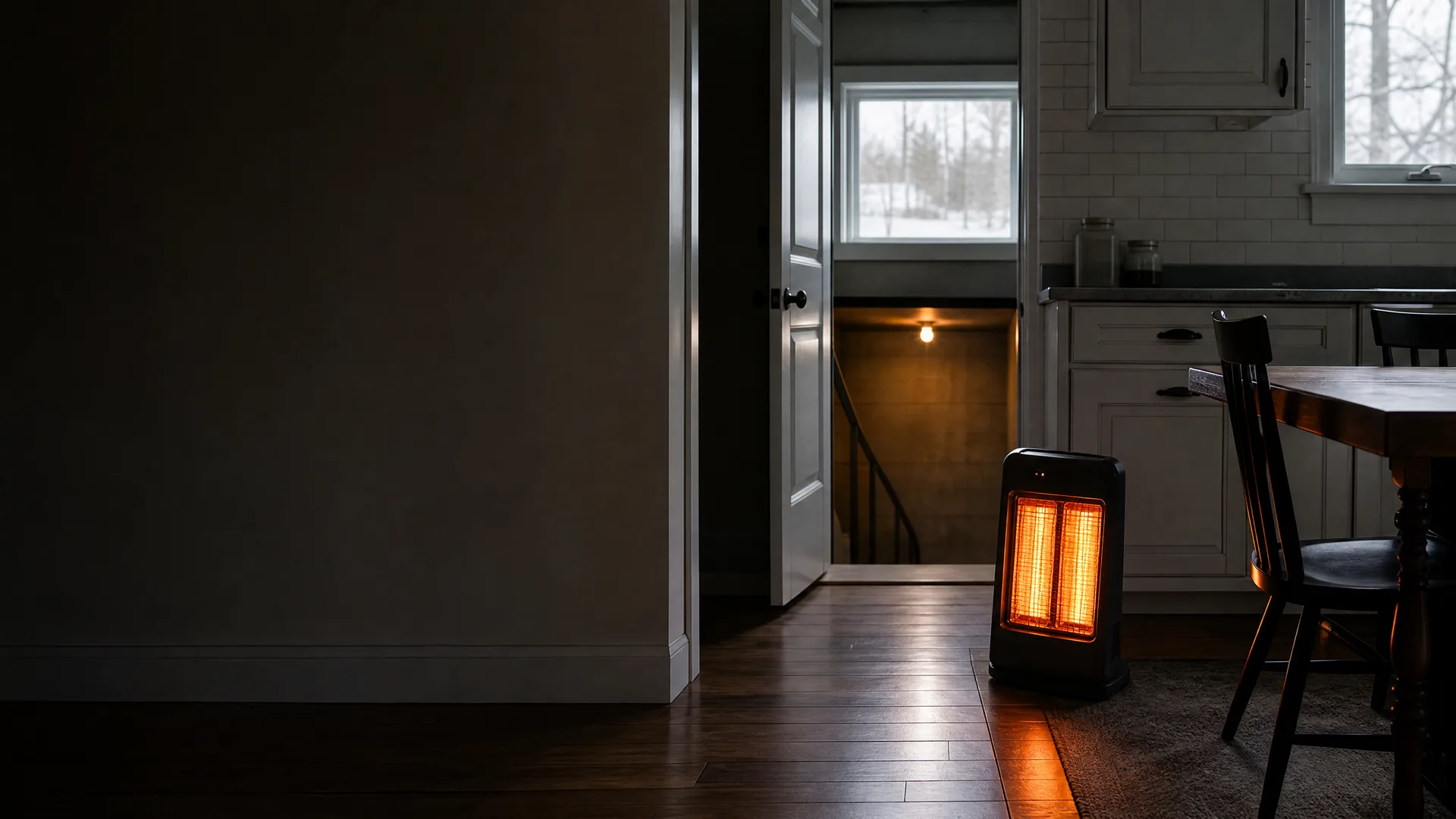
The space heater is the only thing making noise in the kitchen, that low electric hum, and the cord runs across the floor to the one outlet near the table. It's early, still gray out, and your coffee hasn't finished heating your hands. The basement door is open because you went down twice already, first to check the pilot and then to see if the noise changed. It hasn't. Outside it's the kind of New Mexico morning where the cold sits in the yard until ten or eleven. You're doing the math on how many more mornings you can start this way before you call someone, and whether that someone will need to come out twice before they tell you anything useful.
One installer gets your project, so there's no bidding war over it.
There's no charge for the request.
How Your Furnace Actually Starts
The thermostat calls for heat, and the control board checks the limit switch and pressure switch before doing anything else.
If the pressure switch doesn't close, the inducer motor isn't pulling enough draft, and the furnace won't go any further.
Once draft is proven, the igniter heats up or sparks, and the gas valve opens only after that step clears.
A flame sensor has to detect the burner lit within a few seconds, or the gas valve shuts back off as a safety check.
The blower doesn't start right away because the heat exchanger needs a short delay to warm up first.
A limit switch will cut the burners if the heat exchanger runs hotter than it should, which is one way a cracked one gets caught.
A gas furnace goes through a set order every time it fires, and skipping a step isn't allowed. The thermostat sends the call for heat, but the control board doesn't open the gas valve right away. It checks the limit switch and the pressure switch first, making sure the furnace is safe to run before any gas moves. The inducer motor kicks on to pull exhaust out through the vent, and the pressure switch has to confirm that draft is actually happening. If that switch doesn't close, the furnace stops right there. No draft, no flame, by design. Once draft is proven, the igniter gets its turn, either glowing hot or sparking, and only after that does gas reach the burners. A flame sensor is watching for the burner to actually light. It has a few seconds to confirm a flame before the control board shuts the gas valve back off as a safety measure, not a malfunction. Even after the burners are lit, the blower doesn't start blowing air into your rooms right away. It waits for the heat exchanger to warm up first, so you're not feeling cold air. The limit switch stays involved the whole time the furnace runs, watching the temperature inside the heat exchanger. If it runs hotter than it should, the limit switch cuts the burners, and that's often the first sign something inside the exchanger itself has failed.
Before you get your furnace installationAfter you get your furnace installation
Winter nights here average 23°F across the state, and that's the number your furnace is built around. A night that cold means long run times, often most of the night without much of a break, since the house is losing heat as fast as the furnace can replace it. An aging heat exchanger or a weak inducer motor feels that load differently than a new one does. You might notice the air coming out of the vents isn't as warm as it used to be, or the furnace runs longer to get the house to the same temperature. That's the system telling you what the cold already knows.
Source: NOAA statewide winter averages
NOAA nClimDiv 1991-2020 county normals weighted by homes
What's your furnace actually doing right now
Walk through the house and pay attention to what you're hearing. A bang or boom when it kicks on means gas is building up before it lights, not catching right away. A screech from the blower usually points to the motor bearing. If a room that used to warm up fine now stays cold, or the furnace runs long stretches without shutting off, it's losing the fight against the house. Check near the unit for a sooty smell or any yellow tint to the burner flame, which should burn blue. Those are signs of incomplete combustion, and that's not something to leave alone, since it can mean exhaust isn't venting the way it should.
Furnace Running Right
This is what a furnace in good shape looks like. The flue pipes and gas line run clean, the ductwork is sealed up tight, and the unit sits level and steady. It's heating the house without strain, and there's nothing here that needs a second look.
Furnace On Its Way Out
Set on a pallet instead of a solid pad, this one already shows its age. The ductwork above is older galvanized metal, and a furnace in this kind of shape is usually the one that's had a repair or two already. Worth having someone look at before the next cold night.
Winter nights average 23°F statewide
A 23°F night means your furnace is running long stretches just to keep up, not short bursts. If it's old enough that a part is already weak, those are the nights it tends to quit.
NOAA nClimDiv 1991-2020 county normals weighted by homes
1
Old furnace, gas line, and ductwork get disconnected and removed
2
Any needed changes to venting, gas line, or ductwork get made
3
New furnace gets set in place and connected to gas, power, and ducts
4
Flue and intake vents get connected and sealed
Where that leaves you
A furnace 15 to 20 years old, with a cracked heat exchanger or a second repair in a couple winters, is one worth replacing rather than patching again. That's the answer, and nothing about a 23°F night will change it in your favor. Waiting just means finding out on the coldest night instead of before it.
Getting there usually means calling around to a few companies, explaining the same symptoms each time, and lining up quotes to see which one you trust. That part ends here. You're matched with one licensed New Mexico contractor who installs furnaces in homes like yours every winter and knows which parts tend to go first on a unit this old. No juggling calls, no repeating yourself to the next company on the list.