



New Mexico Furnace Pros

Signs of a cracked heat exchanger in New Mexico

Send the request today and stop worrying about who to call.

Step 1 of 3: Equipment

A cracked heat exchanger shows up as a few specific warning signs rather than one clear symptom. Watch for soot inside the furnace cabinet, a strange smell when the furnace runs, or a flame that flickers instead of burning steady. Some homeowners notice headaches or nausea that ease when they leave the house, which points to carbon monoxide leaking through the crack. The crack happens because the metal exchanger heats and cools every time your furnace cycles on and off, and over many winters that stress makes the metal fatigue and split. Gas furnaces here run hard through the winter months, so the cycling adds up. Once cracked, the exchanger can let combustion gas mix into the air moving through your ducts instead of venting outside. That's not a wait-and-see problem. A furnace showing these signs needs a technician to inspect the exchanger directly, since it sits inside the cabinet where you can't see it, and shut it down if the crack is confirmed.

A woman in a gray sweatshirt with her hair pinned up sits in a living room looking off to the side, with a pale sectional sofa, cushions, a potted plant, framed wall art and a large window behind her.
A woman with long wavy brown hair in a gray top and dark cardigan stands near a window, looking to the side, with a living room, fireplace and round mirror blurred behind her.
A woman with curly dark hair in a grey long-sleeved top sits on a grey couch with patterned cushions, looking off to the side in a softly lit living room.
A woman in a gray knit sweater with her hair in a bun sits on a couch indoors, smiling and looking off to the side, with a dining area and framed picture blurred in the background.

What's going on with your furnace right now

Walk over to the furnace while it's running. Look at the flame through the viewing port. If it's leaning to one side, flickering, or splitting into two instead of burning in a steady row, that's worth paying attention to. Open the cabinet and check for soot or streaks of black on the metal. Smell the air near the unit and around your vents. A sharp, formaldehyde-like smell isn't normal. Some households notice headaches or nausea that show up when the furnace is running and ease off when it's not, or a pilot light that burns yellow instead of blue. On its own, any one of these could be something minor. Together, they point to a furnace that shouldn't keep running until someone licensed looks at it.

  1. Gas burns inside a sealed metal heat exchanger chamber.

  2. Heat passes through the metal into air blown across it.

  3. A crack lets exhaust gas leak into that air stream.

  4. The blower pushes that mixed air out through your ducts.

Keep running it or get it checked

Keep running it

  • A cracked heat exchanger can push carbon monoxide into the air moving through your ducts, and you can't smell or see that gas on your own.
  • New Mexico winters mean the furnace runs for hours at a stretch, so a crack that only leaks under heat keeps opening every time the blower kicks on.
  • A carbon monoxide detector near the bedrooms can catch what the furnace itself won't tell you.
  • Waiting usually doesn't fix a cracked exchanger on its own, and the risk is to the people breathing that air, not just the furnace.

Get it looked at

  • A furnace tech can pull the burner assembly and inspect the exchanger directly, or run a combustion analyzer to check for exhaust gas in the air stream.
  • If the crack is confirmed, the furnace gets shut down on the spot until the exchanger is replaced or the unit is replaced.
  • A local tech who services furnaces through a New Mexico winter has seen this failure before and knows where it tends to show up first.
  • Sending one request means one licensed contractor calls, not a handful of companies competing for the job.
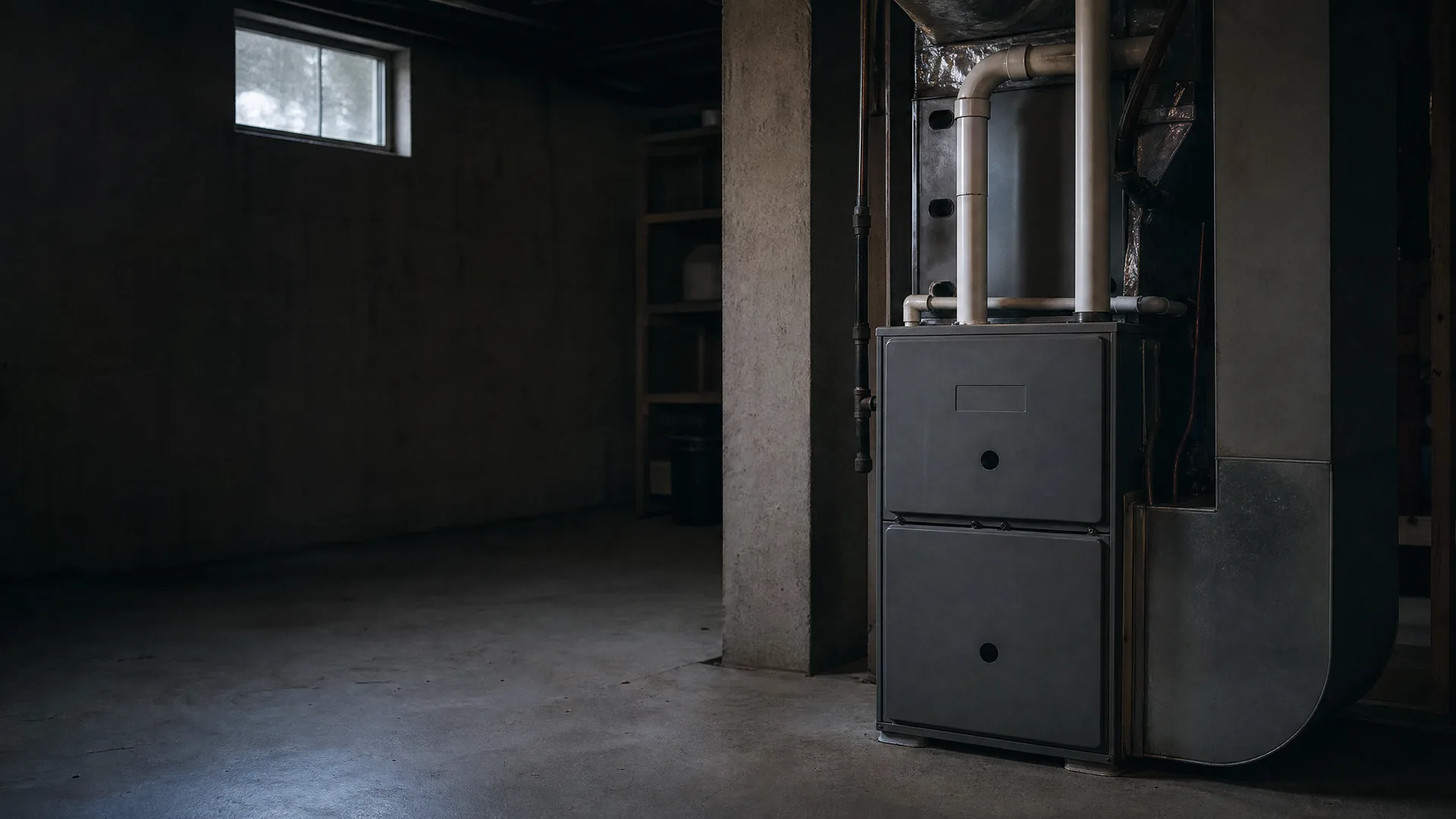
A gray high-efficiency furnace with white PVC vent pipes and attached ductwork stands beside a concrete support column in a dim, empty basement with bare concrete walls and floor and a small window.

The basement went dark an hour ago and you haven't gone down to check why. It's November, cold enough outside that you want the furnace running, not sitting quiet. You go down anyway, sock feet on the concrete, and find it: the burners off, no hum from the blower, just a thin haze of dust catching the bulb light near the cabinet. You'd shut it down yourself after the flame looked wrong the night before, and now the house is cooling room by room. You already filled out the form upstairs. Someone local who works on these furnaces all winter has the information. You don't have to find him. You just have to wait by a quiet furnace a little longer.

One request and it's handed off

A cracked heat exchanger isn't something to sit with while you decide. Once you've seen one of the signs, the next step is getting a furnace tech out to run a real test on it, not guessing from the symptoms alone. That takes someone who works on furnaces in New Mexico homes all winter and knows which failures show up here and how. Send the request through and it goes to one local contractor, licensed, who takes it from there. No list of companies calling you back at once, no sorting through quotes while your furnace sits there running exhaust through the ducts. You've already walked over and checked the flame, maybe caught the smell. That's the hard part. Handing the rest off means you're not the one tracking down who's available or whether they know this equipment. Your job was noticing something was wrong. The rest is someone else's to figure out.

A heat exchanger cracks from metal fatigue, the same way a paperclip weakens after it's bent back and forth enough times. It expands when the burners fire and contracts when they shut off, over and over, all winter.

A furnace that runs for hours at a time on a cold New Mexico night puts that cycle through more heating and cooling swings in one season than a mild climate would in several.

Winter nights average 23°F statewide

Nights in that 23°F range mean your furnace cycles on for hours at a time rather than short bursts. That long, steady run is exactly the kind of heat and cool stress that opens a crack in a weakened heat exchanger, and it's also what pushes leaking exhaust into the air moving through your house.

NOAA nClimDiv 1991-2020 county normals weighted by homes

An old furnace still running fine

A furnace can rack up a lot of winters in New Mexico and never crack. Metal fatigue depends on how hard the unit cycles, not just the calendar. If yours has had a tech look at the burners and heat exchanger each fall and nothing's ever flagged, age by itself isn't a verdict. Some furnaces run fifteen, twenty years on the same heat exchanger without a hairline crack ever forming. What matters more is whether it's been inspected and whether you've seen any of the warning signs, not the number stamped on the nameplate.


A newer furnace with a crack

A heat exchanger can crack in a furnace that's only a few winters old. A defect in the metal, a bad weld, or a furnace that's been short-cycling from a bad thermostat or a dirty filter can stress the metal faster than age alone would. Manufacturing problems get caught after installation, not before. If you're seeing soot, smelling something odd when the furnace kicks on, or watching the flame flicker, a newer unit doesn't rule any of that out. The signs matter more than the furnace's age.

An older beige furnace with a louvered vent panel stands on a concrete basement floor beside galvanized sheet-metal ductwork, a metal flue pipe and vertical pipes along a concrete wall.
Before you get your furnace repair
A beige high-efficiency furnace with white PVC vent pipes stands beside galvanized sheet-metal ductwork in a basement with a concrete floor, exposed wood studs, and metal piping along the wall.
After you get your furnace repair
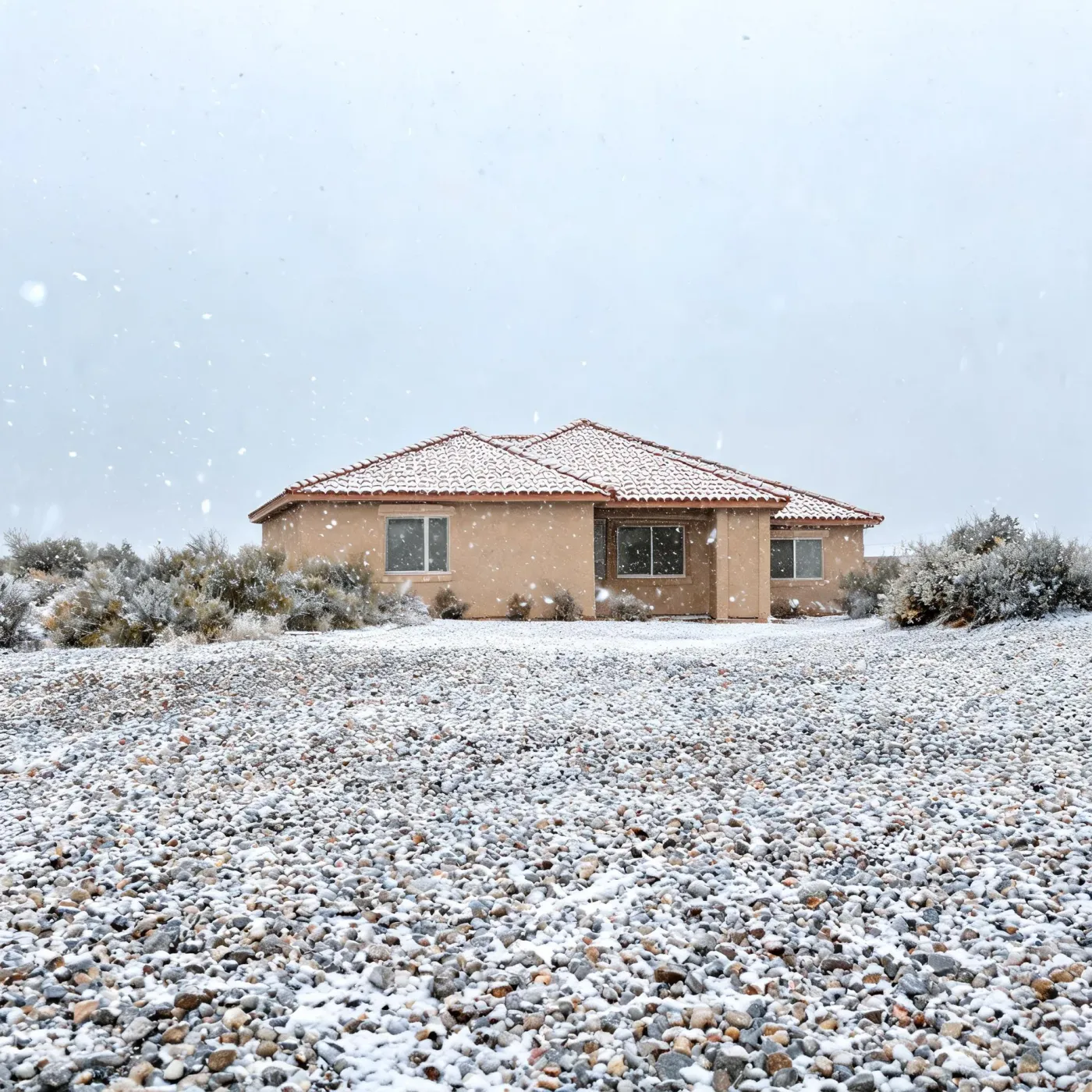
A single-story tan stucco house with a red tile roof stands behind a broad gravel yard dusted with snow, with low shrubs on either side and snow falling under an overcast white sky.

Statewide, winter nights average 23°F, according to NOAA climate data. That kind of cold doesn't let your furnace cycle on and off in short bursts. It locks in and runs for hours, burners firing again and again while the metal heats up and cools down. That's the stress that opens a crack in a heat exchanger that's already weak. If yours has a hairline crack, a long cold night is when it's most likely to leak exhaust into the air your furnace is pushing through the house, right when you need the heat running the longest.

NOAA nClimDiv 1991-2020 county normals weighted by homes

A gray high-efficiency furnace with two PVC vent pipes stands in an unfinished basement beside sheet-metal ductwork, a framed and plastic-covered wall, and a bare concrete wall with vertical pipes.
A furnace like this fires up, the flame burns steady through the viewing port, and the ductwork carries clean heat through the house with nothing but warm air in it.
A gray furnace cabinet in a basement, connected to galvanized sheet-metal ductwork and white PVC pipes, against a concrete wall with exposed metal piping and insulation overhead.
A furnace like this is the one worth having a tech check this fall, especially sitting unevenly on a pallet with no clear sign anyone's inspected it in a while.
A woman with her hair in a bun sits wrapped in a beige knitted blanket on a couch, holding a sleeping child against her chest in a warmly lit room with a lamp and houseplant in the background.
A smiling older woman with gray shoulder-length hair in a cream cable-knit turtleneck sweater stands behind a wooden board holding a round loaf of bread, in a warmly lit kitchen with a dark window and shelves behind her.

Where this leaves you

  • Soot, a strange smell, or a flame that flickers instead of burning steady are the signs worth acting on.
  • None of those signs confirm a crack by themselves, which is why a real test on the furnace matters more than guessing.
  • A furnace tech who works New Mexico winters sees this failure every season and knows where a heat exchanger usually gives out first.
  • Sending one request means one local, licensed contractor looks at your furnace, not a handful of companies calling about the same job.
  • Your furnace's age isn't the deciding factor here. How hard it's cycled through winters like this one is.
  • Once you've spotted one of these signs, the next step is getting eyes on the burners and the metal itself.

You came here looking for signs, and now you have them. Soot inside the cabinet. A smell that wasn't there before. A flame that flickers or splits instead of holding steady. None of them, alone, proves a crack. Together, or even one on its own, they're reason enough to get a real test run on the furnace instead of waiting to see if things get worse.

What matters now isn't how old your furnace is. It's how many winters like this one it's already cycled through, hours at a stretch, burners firing again and again while the metal heats and cools. That's what wears a heat exchanger down, not the number on the install sticker.

A furnace tech who works New Mexico winters has seen this failure before, more than once, and knows where the metal tends to give out first. When you send a request through this page, it goes to one contractor, local and licensed, not a batch of companies all calling about the same job. You checked the flame. You noticed the smell. That's the part that was yours to do. What comes next, getting someone qualified out to look at the burners and the metal itself, is the part you hand off.

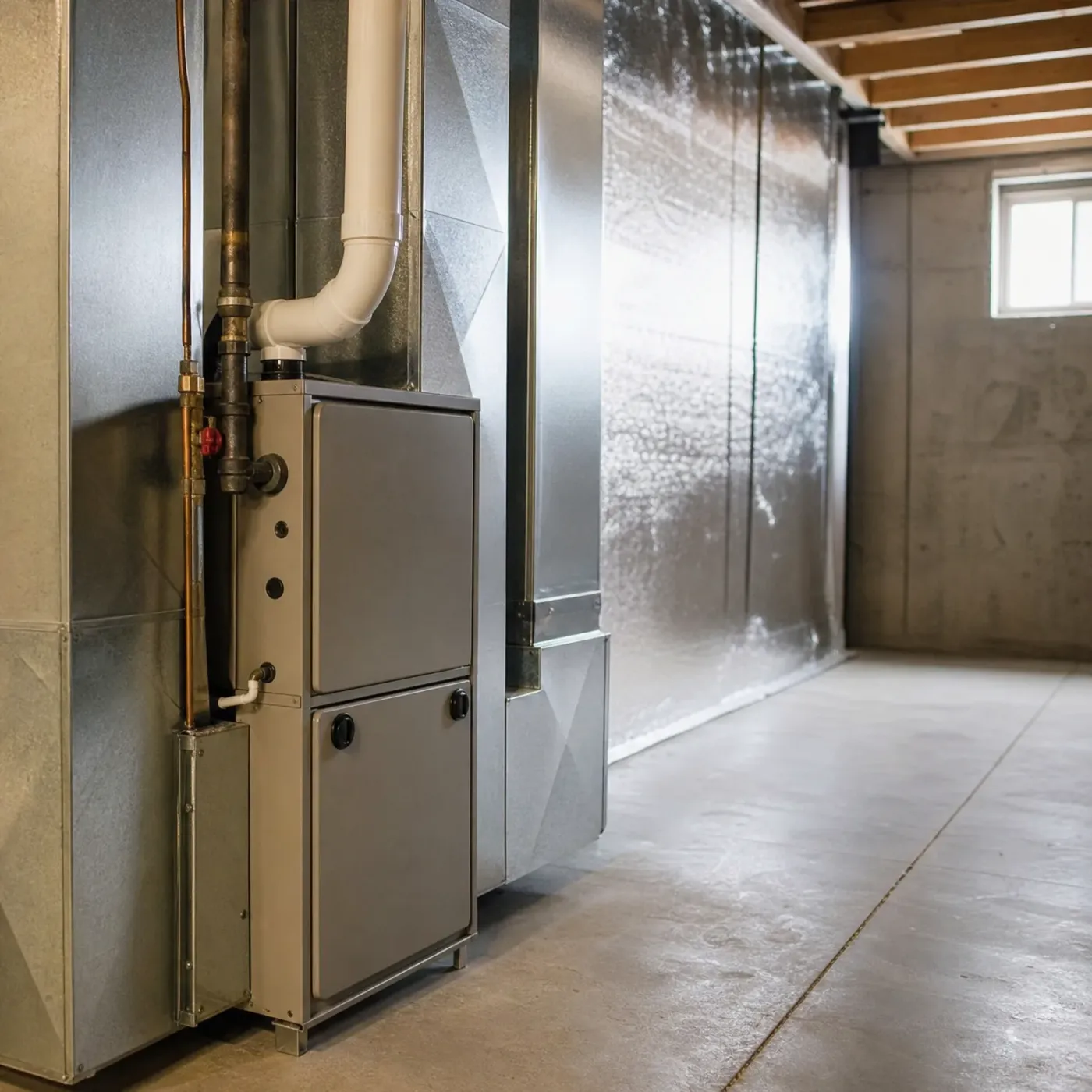
A gray furnace with a white PVC vent pipe and copper piping stands beside large galvanized sheet-metal ducts in an unfinished basement with concrete floor, concrete walls, foil-faced insulation, and a small window.

Done looking for a furnace pro

Find a licensed furnace pro

Your request stays with one local pro.

Sending the form costs nothing.