New Mexico Furnace Pros
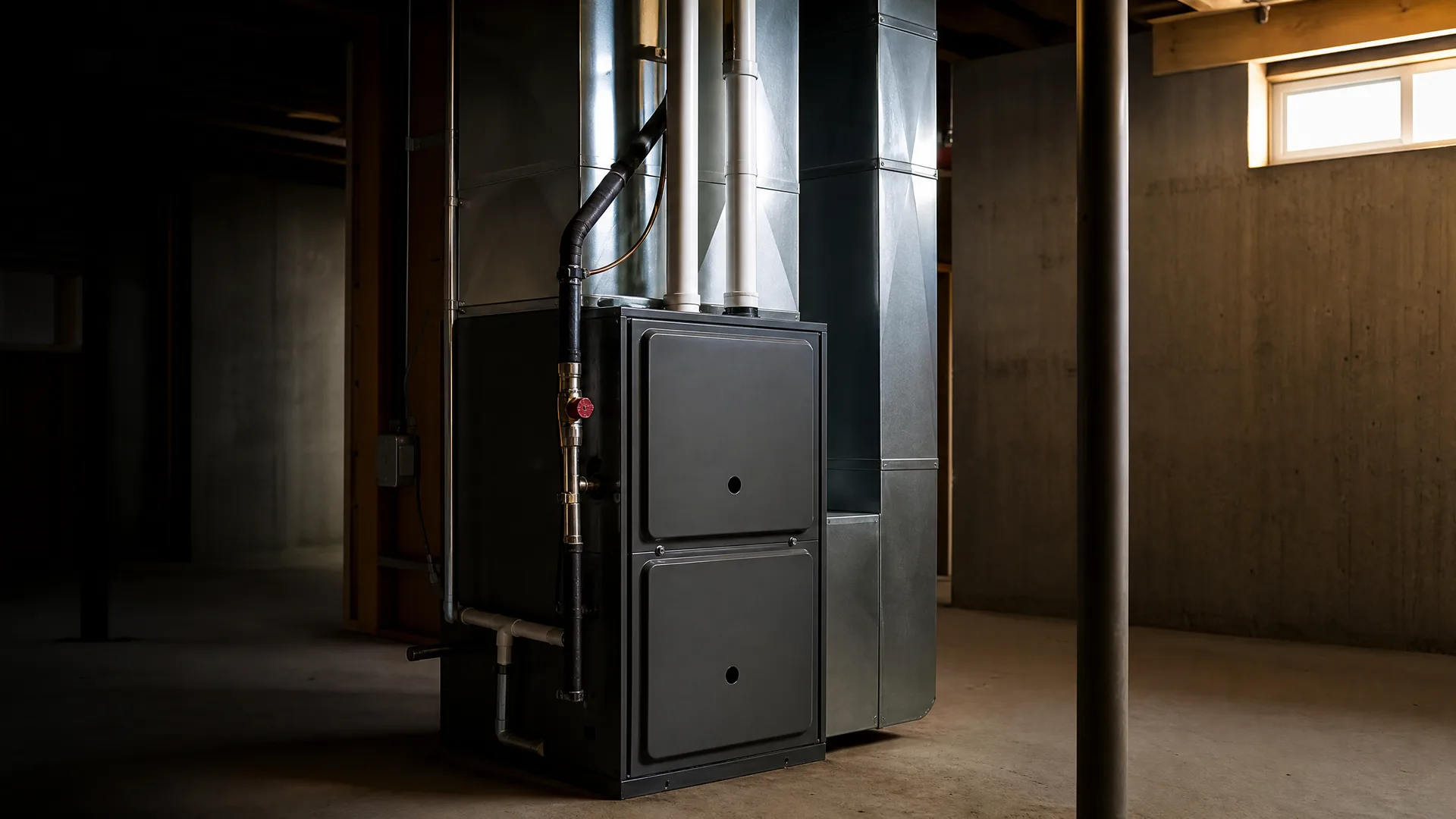
A gray high-efficiency furnace with two white PVC vent pipes stands beside galvanized sheet-metal ductwork in a dim basement with exposed joists and a concrete floor.

Get your furnace to the right pro

What temperature to set the heat in a New Mexico winter

Most people set 68 to 70 during the day and drop it a few degrees at night, but the right number for your house depends on your furnace, your insulation, and how cold it gets where you are. This page gets into what actually works for New Mexico winters and when it's worth having a local furnace contractor take a look.

Get matched

68 to 70 during the day works for most houses in New Mexico, dropped to 62 to 65 at night or when nobody's home. That range runs a gas furnace long enough to keep rooms even without pushing your bill higher than it needs to be. Winter nights here get cold even when the days warm up fast, and that swing is what makes a furnace cycle more than people expect. If your house holds heat well, you can lean toward the lower end. If a room or two runs cold no matter what the thermostat says, that's usually not a setting problem. It points to a duct that needs sealing, a filter that's overdue, or a furnace that's losing efficiency as it ages. Setting the number right only gets you so far if the furnace underneath it isn't running the way it should.

A gas furnace with two gray access panels stands against a plain wall in a basement, connected to sheet-metal ductwork, white PVC vent pipes, and a yellow gas line.

Why your furnace runs in short bursts

A gas furnace is sized to heat your house faster than it loses heat, so it cycles on and off rather than running straight through. Set the thermostat too high and it just runs more cycles trying to catch up. Each start draws the igniter and blower hard, and more cycles means more wear over a winter. Holding a steady number like 68 lets the furnace settle into a rhythm instead of chasing a temperature that keeps climbing.

A gray high-efficiency furnace in a basement corner with white PVC vent pipes, copper and black gas piping, and sheet-metal ductwork beside a plain white wall and wooden stair framing.

What a big night to day swing costs you

Dropping the thermostat more than a few degrees at night sounds like savings, but a furnace has to work harder to climb back up in the morning than it would holding steady. In a New Mexico winter, where overnight temperatures can fall well below freezing, a deep setback means a long recovery run at the coldest part of the day. Keeping the swing to around 5 to 8 degrees, instead of 10 or more, asks less of the system and still saves over leaving it at one number all day.

Why does my furnace feel like it's blowing cold air sometimes?

You walk by a vent and feel air that doesn't seem warm, even though the furnace is running. It makes you wonder if the thermostat setting is wrong or if something's off with the system, especially on the coldest New Mexico nights when you're relying on it most.

That air is warmer than it feels, and it's normal

A gas furnace heats air to around 120 to 140 degrees at the burner, but by the time it reaches a vent far from the furnace, it's cooled some traveling through the ducts. Stand near a vent right after the furnace kicks on and you'll feel the same thing, because the burner takes a few seconds to ignite and the blower starts pushing air before it's fully heated. Compared to your skin at 98 degrees, 90-degree duct air can feel cool even though it's doing its job. If every vent in the house runs cold the whole cycle, that's different and worth having looked at.

A gray-haired, bearded man in a dark coat dusted with snow stands smiling in a dimly lit room with a lamp, mirror, framed art, and a sofa in the background.
An older man with white hair and a beard, wearing a dark snow-dusted coat and scarf, stands in a warmly lit interior hallway with a framed landscape picture, a table lamp and a potted plant behind him, and a snowy view through a window at left.
An older man in a dark snow-flecked overcoat and scarf stands smiling in a warmly lit home entryway, with a glass-paned door showing darkness outside and a lamp-lit room visible through a doorway behind him.
An older man with gray hair and a beard, wearing a dark snow-dusted jacket and scarf, stands smiling in a warmly lit interior hallway with a lit table lamp, a vase of dried branches, and a framed picture in the background.

One Setting or a Schedule

One thermostat setting all winter

  • You set it once in November and leave it there through March, day and night, home or not.
  • The furnace runs whenever the house drops below that number, including at 2 a.m. when three blankets would do the same job.
  • Rooms farther from the furnace or near a lot of windows end up warmer or colder than you set, since one number can't account for that.
  • Your gas use stays higher than it needs to be across the whole winter, since the furnace is working to hold daytime comfort through the night too.
  • It's simple, and if you don't want to think about the thermostat again until spring, this is the tradeoff you're making.

Dropping it at night or when you're out

  • You run 68 to 70 while people are up and in the house, then drop to 62 to 65 for sleep or when nobody's home.
  • The furnace cycles less overall, since it's not fighting to hold daytime temperature through the hours nobody's there to feel it.
  • A programmable or smart thermostat handles the drop and recovery on schedule, so you're not adjusting a dial twice a day.
  • Recovery in the morning takes a short run of the furnace to bring the house back up, not a dramatic spike in cycling.
  • If your ductwork or insulation is uneven, you'll still notice some rooms lag behind others during that recovery, same as before.
  • It asks a little more attention than one fixed setting, but it's where most of the saving in a New Mexico winter actually comes from.
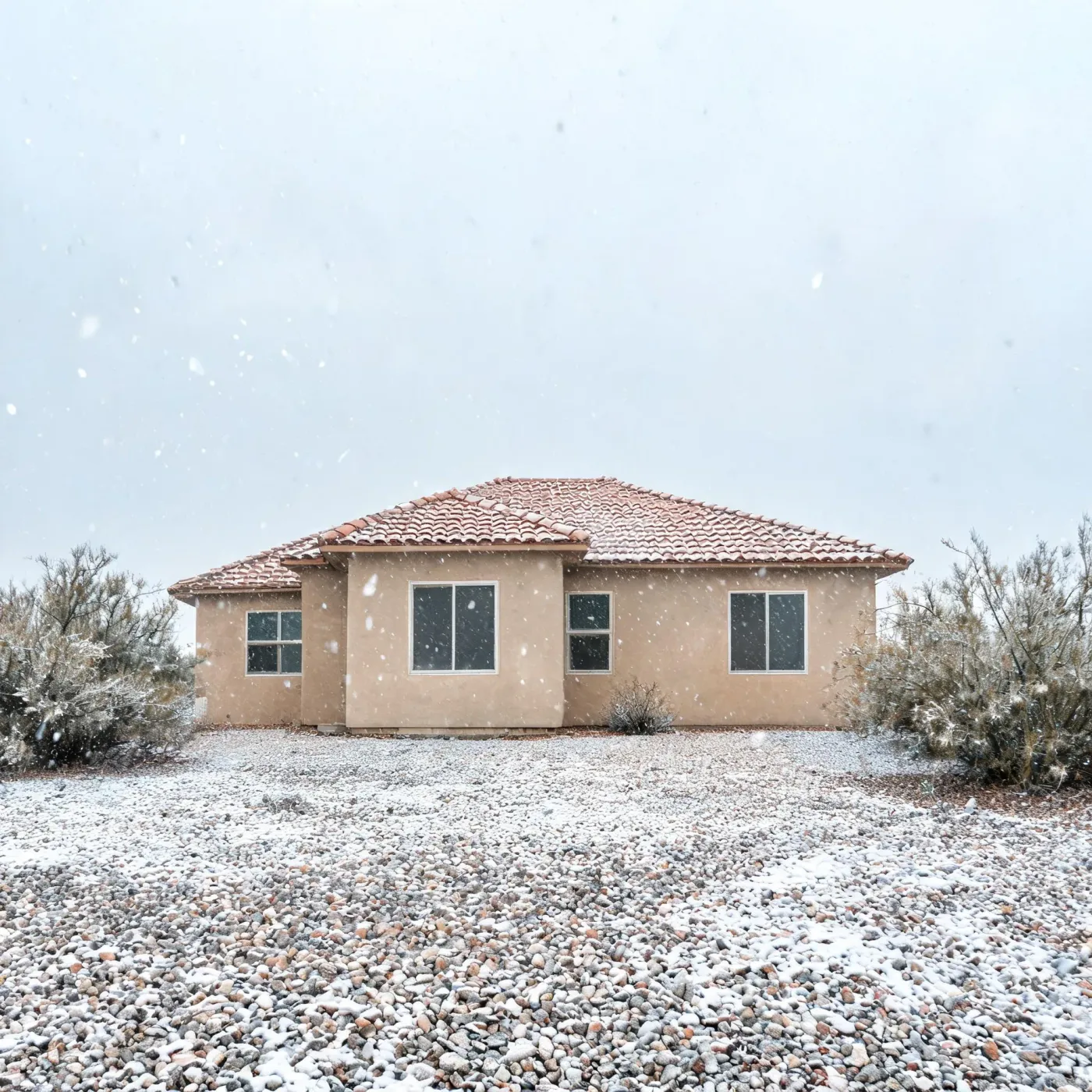
A single-story tan stucco house with a red tile hipped roof during falling snow, surrounded by light snow-dusted gravel ground and desert shrubs under a pale overcast sky.

The National Weather Service puts the statewide average winter low at 23°F. That's the number that matters for your thermostat, because it tells you how hard your furnace has to work just to hold steady overnight. On a night that cold, a house set too low lets the furnace fall behind, and you'll feel it in the mornings as cold floors and a slow climb back to comfortable. A furnace that's been checked over before the cold sets in catches a weak igniter or a dirty flame sensor before a 23 degree night turns into a no-heat call. A local contractor who services furnaces through these winters knows which parts tend to go first in this kind of cold.

NOAA nClimDiv 1991-2020 county normals weighted by homes

The right pro for this job

A furnace that short-cycles, won't hold a set temperature, or runs longer than it used to is usually telling you something about the equipment, not the thermostat number. Burners get dirty, igniters weaken, blower motors wear down, and a furnace that's losing efficiency will fight you at any setting you pick. That's hard to catch on your own, especially with a system that mostly works, just not quite the way it did last winter. A local contractor who services furnaces all season, through the cold nights New Mexico gets and the swings in between, has seen what tends to go wrong in homes like yours and what to check before it leaves you without heat on a night in the 20s. Getting matched with one means a single contractor looking at your specific setup, not a list of strangers calling about a job you described once. Worth sorting out before the next cold snap, not during it.

What you'd notice at 72

Push the thermostat to 72 and the furnace stops cycling and starts running long stretches, trying to hold a number your house probably doesn't need. Rooms farthest from the furnace might still feel cooler than the ones near it, so you nudge it up again instead of catching what's actually wrong. The burner runs longer each time it fires, which asks more of an igniter or a blower motor that's already due for a look. None of that shows up as a dramatic failure. It shows up as a bill that climbs and a furnace that's working harder every week without you noticing until it quits.


What a lower setting protects

Keeping the day setting at 68 to 70 and letting it drop at night means the furnace cycles the way it was built to, on and off, catching up and resting. That matters more than the number itself. A furnace that isn't straining to hold a setting too high for the house tends to last longer before parts like the igniter or burner need attention. It also means a service visit finds small wear before it becomes a cold morning with no heat. The setting alone won't catch a dirty burner or a weak igniter, but it keeps the furnace from making that problem worse.

A woman wrapped in a cream textured blanket sits in an armchair beside a lit lamp and a dark window, with an open book in the foreground.
A smiling older woman with gray hair in a cream knit sweater stands in a dimly lit kitchen beside a window showing snow outside, with a round loaf of bread on the counter in the foreground.
A gray high-efficiency furnace stands on a concrete basement floor beside sheet-metal ductwork, with white PVC vent pipes and a black flexible line running up to exposed wood floor joists, next to a wood-framed post against a concrete wall.

A furnace holding its number

This is what a gas furnace looks like doing its job. The burners fire, the blower pushes air through the ductwork, and the flue carries exhaust out through the PVC pipe on top. Set the thermostat where your house needs it and this is all it has to do.

A beige metal furnace with a louvered front panel stands on a concrete floor against a concrete wall, connected to galvanized sheet-metal ductwork and a metal pipe.

A furnace working too hard for it

An older furnace like this one can still hold a setting, but every degree past what your house needs makes it run longer to get there. Gas lines and ductwork wear the same way regardless of age. A furnace pushed past what it needs shows the strain first in longer runs, then in the parts that give out from the extra cycles.

Why does the thermostat setting feel like it's costing you

You notice it in the gas bill first, the one that shows up higher than last January without anything else in the house changing. Then you notice it in the house itself: a room by the front door that never gets warm, a furnace that seems to run most of the afternoon, a thermostat that says 70 but a living room that still feels like 66. Left alone, a furnace working harder than it needs to doesn't just cost more to run. It puts more hours on the burners and the blower motor, and a furnace that runs long and often wears toward a repair sooner than one that cycles the way it was built to.

A furnace in a dim basement with a dirty pleated air filter partially pulled out of its slot, beside a water heater and concrete walls and floor.

You're in the basement on an October afternoon, filter half pulled from the slot, and it's grey with dust straight through. You'd meant to check it before the first cold snap, the one that always seems to hit before Halloween. The furnace sits quiet, not running yet, waiting on a thermostat still set to whatever it was left at in spring. You hold the filter up to the bare bulb overhead and can't see light through most of it. It's the kind of thing that's easy to put off until the burners are firing every twenty minutes trying to push air through it. You set it on top of the cabinet to grab a new one from the shelf, already thinking about what else in this furnace hasn't been looked at since last winter.

Winter nights average 23°F statewide

23°F is already below freezing before your furnace does anything. That's the gap it has to close every night just to keep the house where you left the thermostat, which is why a setting that feels fine at 6 p.m. can leave rooms cold by 3 a.m.

NOAA nClimDiv 1991-2020 county normals weighted by homes

Where this leaves you

  • A gas furnace set around 68 to 70 during the day and dropped at night holds a New Mexico house steady without running longer than it needs to.
  • Short cycling, cold air at the vents, or a bill that jumps for no reason usually points to the furnace itself, not the number on the thermostat.
  • A furnace that's maintained every fall holds whatever number you set it to with fewer surprises once the cold settles in for good.
  • A local contractor who services furnaces all winter has usually already seen whatever is causing yours to struggle.
  • Matching you with one licensed contractor near you means the person who calls already knows the kind of problem your furnace is likely having.

68 to 70 during the day, down to 62 to 65 overnight, is the setting that holds a New Mexico house steady through winter without asking the furnace to do more than it has to. That number doesn't change because the house has a bad night or a bill comes in high. What changes is the furnace underneath it. A burner that's dirty, an igniter going weak, a blower losing strength, any of these will make a good setting look like a bad one, and no amount of adjusting the thermostat fixes what's wrong with the equipment itself. That's what fall maintenance is for, catching the wear before a cold snap turns it into a repair. A furnace that's been checked before the cold settles in holds its number with fewer surprises in January. If yours has started short cycling, blowing air that doesn't feel warm, or running longer than it used to, that's the furnace telling you something, and it's worth having someone look at it before the coldest nights arrive. The contractor who gets matched to you is local and licensed, someone who works on furnaces all winter in houses like yours and has likely already seen whatever is behind what yours is doing. You'll hear from one contractor, not several, and the person calling will already have a sense of what to check first. The thermostat setting was never really the question. What the furnace does with that setting is.

A dark gray high-efficiency furnace with two white vent pipes and connected sheet-metal ductwork stands in an unfinished basement with concrete walls, a support pole, and a small window.

Matched to your furnace job

Step 1 of 3: Equipment