Profile view of a bearded man wearing a dark green baseball cap and a dark gray T-shirt against a plain light background.

Why your furnace is blowing cold air in New Mexico

Step 1 of 3: Equipment

Why is my furnace blowing cold air?

Cold air coming out of the vents when you're expecting heat is unsettling, especially when you're trying to keep the house warm for everyone in it. Most of the time it's not the whole system failing, it's one step in the startup process that didn't go right. Knowing what usually causes it helps you figure out whether this is something to check yourself or something that needs a contractor out to the house.

Usually the igniter or flame sensor, not the whole furnace

Most gas furnaces blow cold air because the igniter failed to light the burners, or the flame sensor shut the gas off right after. Either way the blower still runs since that's a separate motor on its own timer, so you feel air moving but it never got warm. A dirty filter or a closed vent can do the same thing by starving the burners of airflow. Less often, the thermostat fan setting got switched to "on" instead of "auto", which keeps the blower running between heating cycles and pushes room-temperature air through the house. None of these mean the furnace is done. They mean something in the startup sequence needs a contractor to find and fix it.

A beige high-efficiency furnace stands on a concrete basement floor beside sheet-metal ductwork, with white PVC vent pipes, flexible conduit and copper and steel piping running up a concrete wall to an electrical box.
Here the igniter lit, the flame sensor confirmed it, and warm air is moving through the ducts the way it should.
An older gas furnace with a louvered front panel stands on a concrete basement floor beside large sheet-metal ductwork, a metal flue pipe, copper piping and wood framing.
Here the igniter clicked but never caught, so the furnace blows unheated air until a contractor finds why.

You notice it fast here because a gas furnace blowing cold air isn't just an inconvenience, it's the only thing standing between the house and a cold winter night in New Mexico. Someone in the house is cold right now, and the thermostat telling them heat is on makes it worse, not better. Leave a furnace cycling like this and the blower keeps running, pushing room-temperature air through the ducts while the gas and electric meters both keep turning for a system that isn't doing its job. Depending on what's actually failing, that cycling can also wear on the parts around it, the ones that were working fine until the ignition problem started stressing them too. None of that gets fixed by waiting it out or resetting the thermostat again. It takes someone opening the cabinet and watching what happens when the furnace calls for heat: does the igniter glow, does it light, does the flame sensor see it. That's not a guess you want to make yourself with the panel off and the gas valve in front of you.

A woman and a child wrapped together in a knitted gray blanket on a couch, with the child's head resting on her shoulder and a lit table lamp and houseplant in the background.
An older woman with short gray hair in a cream cable-knit turtleneck sweater smiles while looking to the side in a wooden kitchen, with a round loaf of bread on a board in the foreground and a lit candle by a dark window.
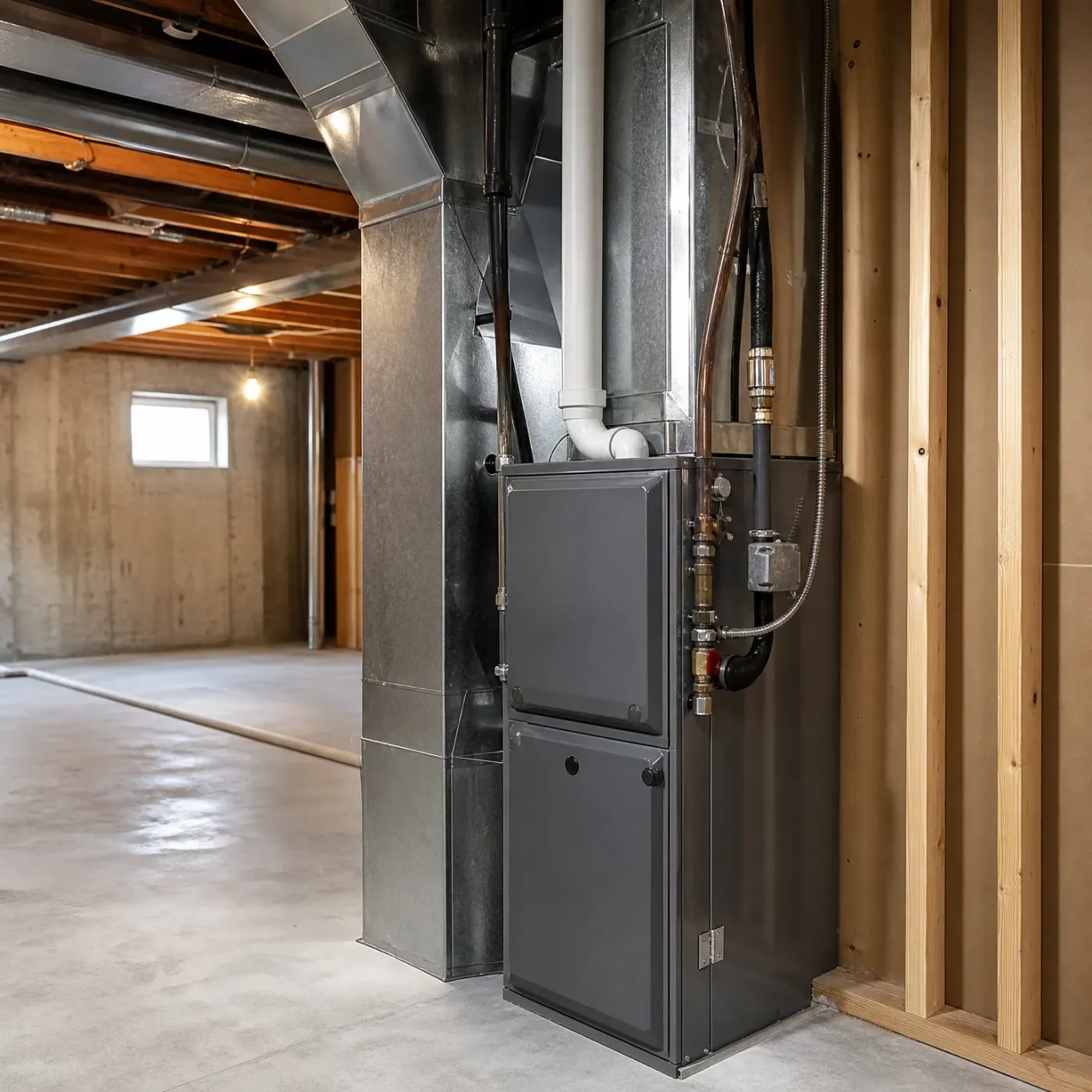
A gray furnace with copper and flexible piping stands against a wood-framed wall in an unfinished basement, connected to galvanized sheet-metal ductwork and PVC venting, with a concrete floor and exposed joists.

No phone calls to make

The pro who reaches out is licensed in New Mexico.

Explain the job once and skip repeating it on every call.

Get one local pro

You only hire the pro if you want to.

A woman in a knitted shawl sits in a living room with a fireplace, shelves, a sofa with cushions, and a lamp by a bright window, looking off to the side.
A woman with long brown wavy hair in a green shirt over a white top stands in a living room with built-in white shelves, a ceiling fan, a potted plant and a sliding glass door.
A woman with shoulder-length gray-streaked hair in a light gray knit sweater stands smiling and looking off to the side in a living room with a sofa, houseplant, framed picture, and sunlit sliding glass door.
A woman with shoulder-length curly gray hair wearing a gray knit sweater stands near a window with a sheer curtain, looking to the side, with a blurred interior room behind her.

The blower keeps running anyway

A gas furnace won't run the burner forever if something stops it partway through the ignition sequence, but the blower motor doesn't know that. It's on a separate control, set to move air for a set time once it starts. So when the igniter fails to catch or the flame sensor doesn't see a flame, the burner shuts down but the fan keeps pushing air through the ducts. That air was never heated, so it comes out of the vents at room temperature or colder, and it can run that way until the thermostat cycle ends or a contractor shuts it down.

A sensor built to shut things off

The flame sensor's whole job is to confirm a flame is actually burning after the igniter fires. If it doesn't detect one within a few seconds, the control board cuts gas to the burner rather than let it keep trying. That's a safety step, not a malfunction in itself, but a sensor coated with residue or sitting slightly out of position can fail to register a flame that's really there. When that happens the furnace locks out the burner and leaves you with a blower moving cold air through a house that's getting colder by the hour.

Winter nights average 23°F statewide

23°F is a hard freeze, and that's the average overnight low here, not the coldest it gets. At that temperature a furnace stuck blowing cold air isn't a minor annoyance, it's the gap between a warm house and a dangerously cold one by morning.

NOAA nClimDiv 1991-2020 county normals weighted by homes

Cold air, one cause, one fix

  • A furnace blowing cold air almost always traces back to one failed step in the ignition sequence, not a full breakdown.
  • The blower running without heat is a symptom of that failed step, not a separate problem to chase down.
  • A contractor who works on furnaces all winter in New Mexico has seen which part usually fails first in this kind of weather.
  • Sending this to one licensed local contractor means one visit, one diagnosis, and no juggling calls from companies you don't know.
  • Overnight lows near freezing mean the furnace needs to be running right again before the next cold night, not sometime next week.
  • Once the actual cause is found, getting warm air moving through the house again is usually a straightforward fix.

A furnace blowing cold air is telling you something specific: it tried to light, and one step in that sequence didn't finish. The blower you hear running is just doing its job on a separate timer, moving air whether the burner caught or not. That's why this almost never means a new furnace. It means finding the one part that stopped the sequence, whether that's the igniter, the flame sensor, or something further down the line, and replacing it.

Finding that part fast matters more here than it would somewhere mild. With overnight lows averaging near freezing, a furnace stuck blowing cold air isn't something to leave for next week. It needs a contractor who already knows what tends to fail in this kind of cold, because they've been working on furnaces all winter and have seen this exact complaint before, in houses not unlike yours.

Sending the request through gets you one contractor, licensed and local, not a round of calls from companies you've never heard of trying to win the job. You explain the problem once, to someone who shows up already knowing what's likely wrong before they open the panel. That's the difference between spending an evening on the phone and spending it waiting for someone who already knows this furnace, this weather, and this failure.

Once that part is identified, getting warm air moving through the house again is usually straightforward from there.


Sunlit corner of a room with a wooden sideboard holding a ceramic vase of olive branches and a dark wooden bowl, beside a white-framed window, a hardwood floor and woven rug.
A wooden cabinet holding a pale ceramic vase with leafy branches stands beside a beige wall in a sunlit room with hardwood floors, a jute rug, and a window showing green foliage outside.
Sunlit room corner with a beige upholstered sofa holding a rust-brown cushion, beside floor-length linen curtains at a window, over a wood floor with a woven rug.
Corner of a room with beige walls, a framed photograph, a floor-length linen curtain beside a window, an upholstered armchair with a knit pillow, white baseboards and trim, wood flooring and a pale rug.
Sunlit living room corner with a beige upholstered armchair with a cushion, linen curtains beside a wooden-framed window, green vertical panelled wall with a framed print, and a wooden table edge over a woven rug.

One form, no calling around

Only one pro gets your request, so you hear from one company.

Skip the calls

Asking costs nothing, and the choice to hire stays yours.