Draining the way it should
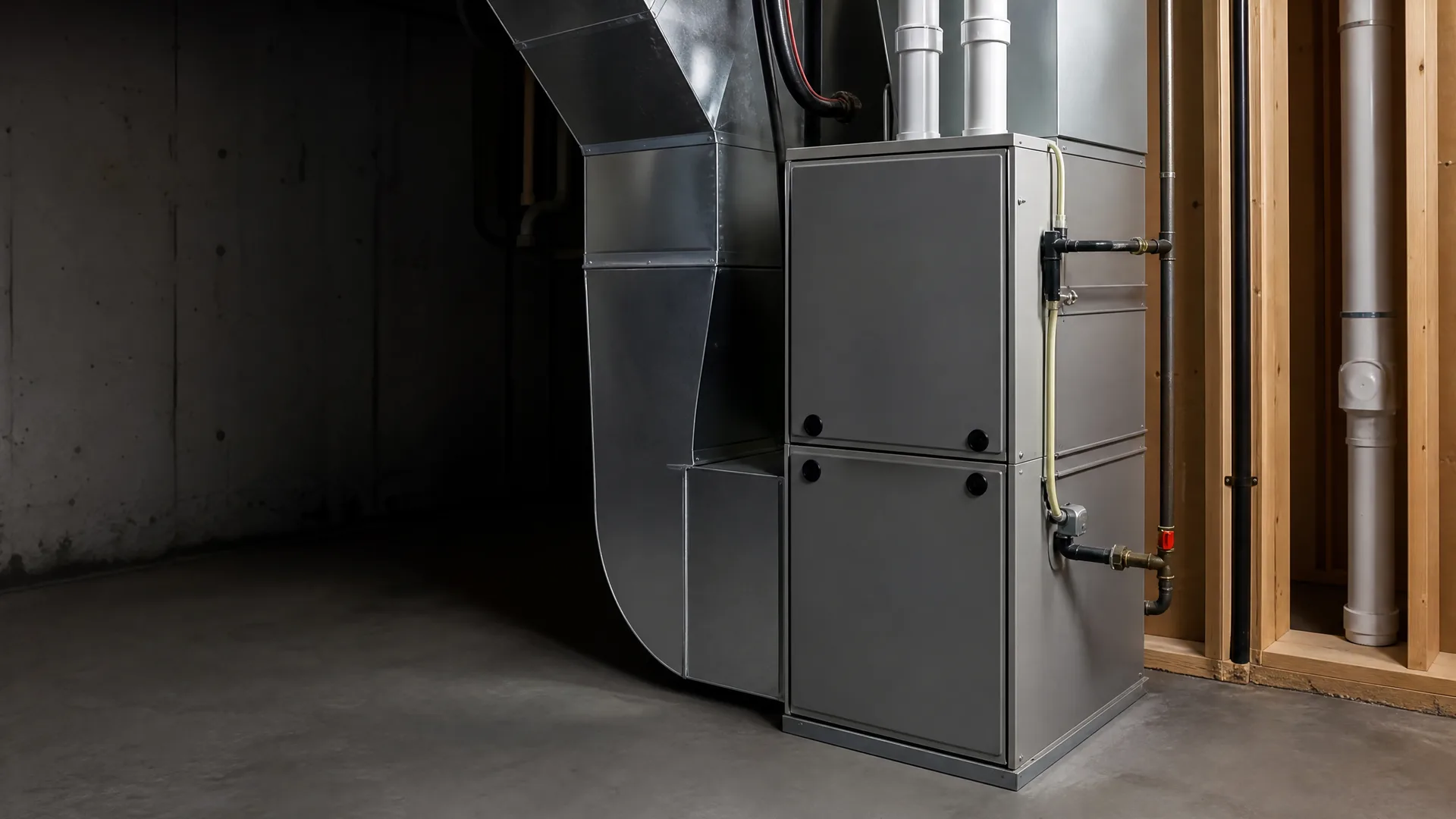
This is a high-efficiency furnace with its PVC flue pipe and condensate drain running the way they're meant to. Water from the second heat exchanger moves through the line and out, and you never see it pool at the base.
 Match me with a pro
Tell a local repair pro what your furnace is doing.
Water around the base of your furnace is not something to wait on. In a gas furnace, that water is usually condensate, and it means something isn't draining the way it should. It can be a clogged condensate line, a cracked drain trap, a bad condensate pump, or a heat exchanger that's failing. Some of these are a quick fix. One of them means the furnace needs to be replaced.
You won't know which one you're dealing with by looking at it. A furnace that's leaking from a clogged line looks the same from the outside as one with a failing heat exchanger. That's not something to guess at, especially with a gas furnace, where a cracked heat exchanger can let combustion gases into your home.
This is the kind of problem worth getting a straight answer on fast, from someone who actually works on furnaces in New Mexico. Gas furnaces here run plenty of hours once the weather turns, and a local contractor who services them all winter has seen most of what causes this. They'll know the common failure points on the models that show up in this area, and they won't need to guess their way through it.
When you request a match through this page, you're connected with one licensed contractor local to you, not a handful of companies competing for your callback. That contractor will reach out to you directly about your furnace and what's going on with it. You're not stuck fielding calls from five different outfits trying to figure out who actually knows your system.
Finding the source of a furnace leak means someone who can look at the drain line, the trap, the pump, and the exchanger itself and tell you which one is the actual problem. That's worth getting right the first time, not worked out through trial and error while water keeps showing up on your floor.
A gas furnace that's leaking water is almost always a high-efficiency model with a second heat exchanger, the kind that pulls so much heat out of the exhaust that it condenses into water, which then has to drain out through a plastic line or a small pump. When that water shows up on the floor instead, something along that path has failed. Most often it's a clogged condensate line, slow drainage from dust and debris, or a cracked trap. A condensate pump that's quit will do it too, and so will a drain line that was never pitched right to begin with. In New Mexico's dry climate this isn't a humidity problem, it's a plumbing problem inside the furnace itself. Left alone, that water can back up into the burner compartment and trip a safety switch, or corrode parts it shouldn't touch. It won't fix itself, and running the furnace while it leaks only adds to what needs repairing.


The water starts as exhaust gas. Inside the second heat exchanger, it cools enough to turn liquid, and gravity pulls it down to a trap before it ever reaches the drain line. That trap is supposed to hold water. The small pool sitting inside it seals off the line so exhaust gas has no path backward through the furnace. Trouble starts lower down, usually right where the tubing bends near the floor or exits the cabinet. That's the spot most likely to clog first, and once it does, water has nowhere to go but back up. Some furnaces catch this early. A float switch sits inside the drain pan or trap and cuts power to the furnace the moment water rises past where it belongs. Furnaces without that switch, or with one that's stuck or failed, keep running while the pan fills and spills over. If the system uses a condensate pump instead of a straight gravity line, that pump has its own float switch, and it's that switch, and the motor it triggers, that can fail and leave water with nowhere to go.


A clogged line or a cracked trap doesn't fix itself, and running your furnace while it leaks can mean water reaching the burner compartment or the floor around it. Winters in New Mexico aren't long, but a furnace that won't run safely on a cold night is still a problem you need solved, not studied. Finding the clog, the crack, or the failed pump means getting inside the furnace, and that's a job for someone who works on these high-efficiency units regularly and knows where condensate lines usually fail on the models common here. A local contractor who sees this furnace design every season knows what to check first and what usually turns out to be the cause. Submitting your information connects you with one contractor matched to your situation, someone who can look at your specific furnace and tell you what's actually wrong, not a general guess about what it might be.
Condensate is acidic, and over time it leaves behind a slime inside the drain line that narrows the path until water backs up faster than it can drain. New Mexico's dry air doesn't cause this, since the moisture comes from inside the exhaust, not from the air around the furnace. What matters more is the condensate trap, which has a bend built into it on purpose. That bend holds water to block exhaust gas from coming back up the line, but it's also where sludge collects first, which is why a cracked or clogged trap is one of the first things a technician checks.
Furnaces in New Mexico often sit in a garage or an unconditioned space, and if the condensate line runs through an area that drops near freezing on a cold night, the water inside it can freeze and block the line completely. That backup shows up as water at the base of the furnace the next morning, even though the line was draining fine all week. A technician can tell the difference between a frozen line and a clogged one by where the water is pooling and whether the blockage clears once the space warms up.





This is a high-efficiency furnace with its PVC flue pipe and condensate drain running the way they're meant to. Water from the second heat exchanger moves through the line and out, and you never see it pool at the base.

This older furnace has galvanized ductwork and flue pipe, and the water collecting on the concrete floor next to it means the drain path has failed somewhere between the trap and the line outside. A furnace tech who works on these in New Mexico basements every season can trace it to the actual clog or crack.
Look at the base of the unit and the floor around it. You might see a small puddle on the pan underneath, water staining the floor nearby, or a wet patch on the carpet or drywall if the furnace sits in a closet. Sometimes it's just a few drops that show up after each heating cycle, and sometimes it's enough to pool and spread. You may notice a musty smell if the water has been sitting a while, or rust starting on the cabinet near the bottom. If the leak keeps going without attention, the water can reach the burner compartment, damage the floor underneath, or lead to mold in a closet with poor airflow. None of that happens overnight, but it doesn't fix itself either.
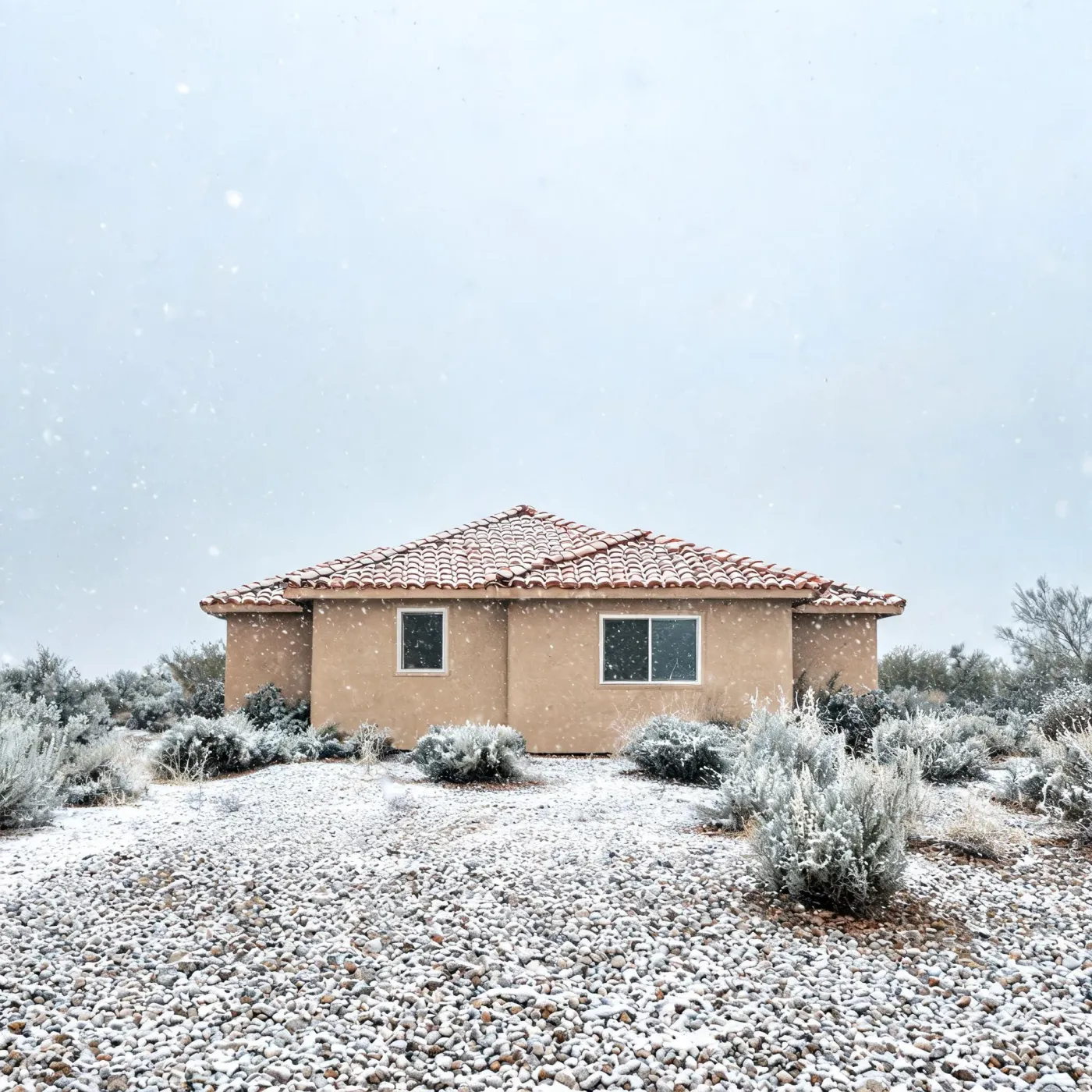
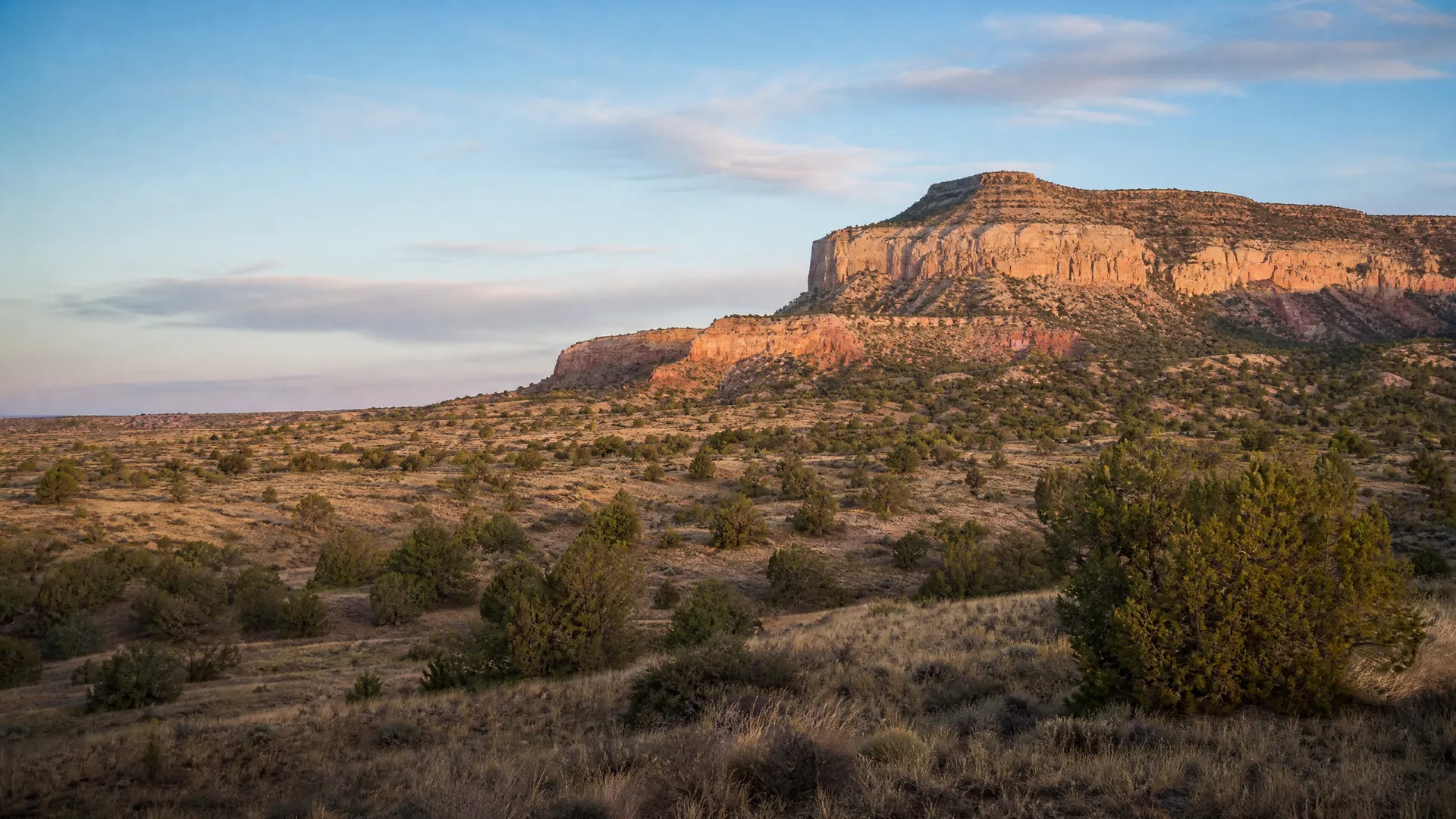
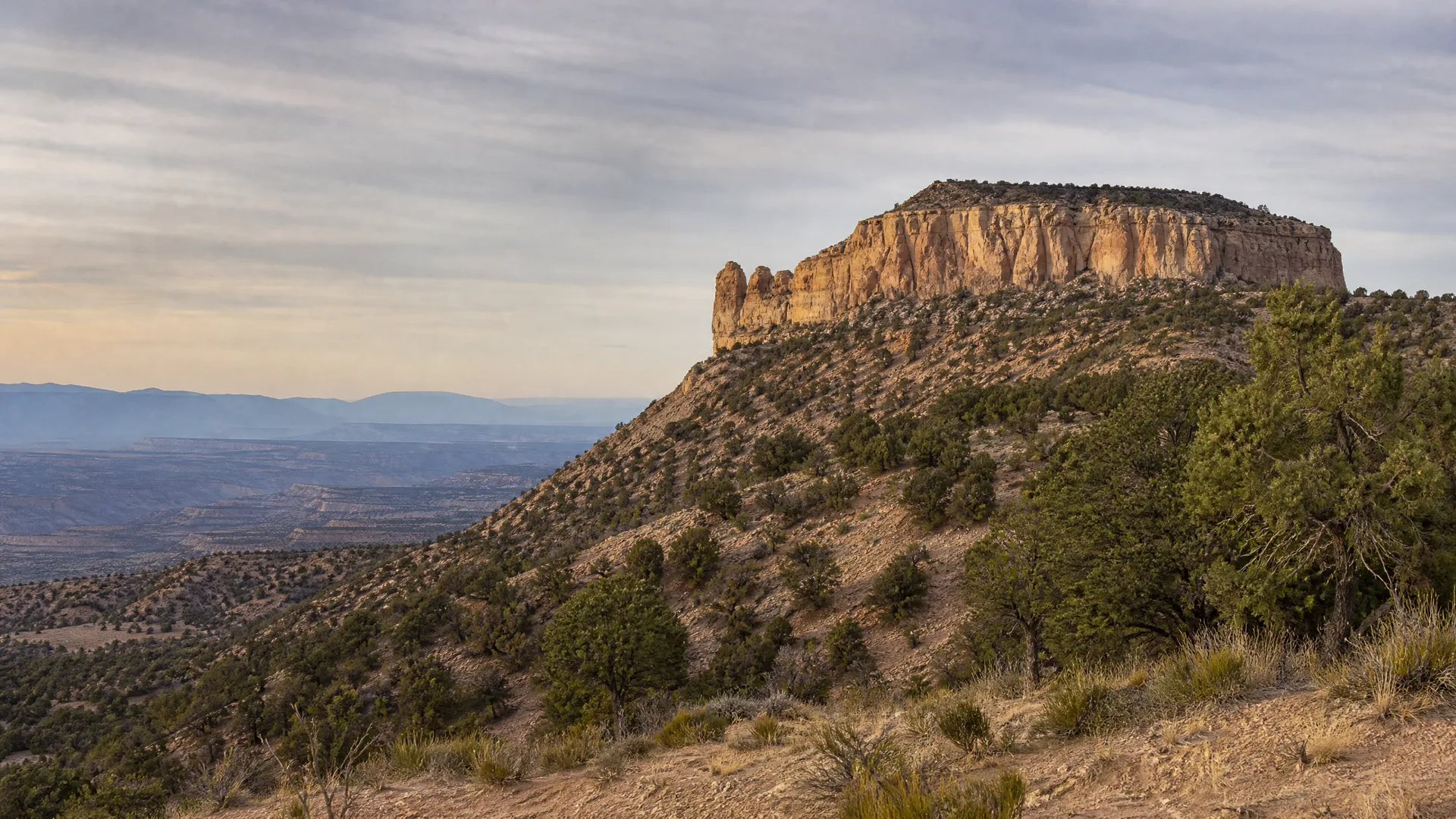
Winter nights across New Mexico average 23°F, according to NOAA climate data. That's cold enough for most homes here to run the furnace hard overnight, and a high-efficiency furnace run that long and that often produces a steady stream of condensate. If the drain line or trap is already partly clogged, those long cold nights are when you're most likely to see water at the base of the unit, since the furnace is pulling more exhaust through the second heat exchanger than it would on a mild day. A leak that only shows up on the coldest nights still means the drain isn't keeping up.
NOAA nClimDiv 1991-2020 county normals weighted by homes


The clog doesn't clear on its own. Water keeps backing up, a safety switch may shut the furnace off, or water reaches the burner compartment or the floor below it.
Someone who works on these drain lines and traps all season can find where it's clogged or cracked and get your furnace draining and running safely again.
At 23°F overnight, your furnace is going to run most of the night, every night, from December through February. That's a lot of condensate moving through the drain line, and a clog or crack doesn't get a break to let things dry out.
NOAA nClimDiv 1991-2020 county normals weighted by homes
Burner fires and heats air for your home
Exhaust passes through the second heat exchanger and cools
Flue gas condenses into water inside that exchanger
Condensate drips down into the drain trap below

Water at the base of your furnace means the condensate isn't draining the way it was built to. A clogged line, a cracked trap, a pump that's quit, or a blocked flue pipe. Whichever it is, the furnace is telling you something specific, and it needs someone to go find out which.
That's not a job for guessing. Someone who works on these drain lines and traps all winter knows where New Mexico furnaces tend to clog first and what to check before anything else. When you request service, you're matched with one licensed local contractor for your furnace, not a list of companies competing for the call. They'll reach out to you directly, already knowing what you've described, and take it from there.

A furnace pro near you