Profile view of a bearded man wearing a dark baseball cap and a dark gray T-shirt against a plain off-white background.

Why your furnace keeps turning on and off in New Mexico

Step 1 of 3: Equipment

A furnace that turns on and off too often is usually shutting itself down early, not running a normal cycle. The most common reason is a dirty air filter choking off airflow, which makes the furnace overheat inside and trip a safety switch before it's done heating. A cracked heat exchanger, a weak flame sensor, or a blocked vent can cause the same thing. Thermostat placement matters too, especially in an older adobe or block home where one room runs warmer than the rest and fools the thermostat into shutting the system off too soon. Short cycling like this wears on the furnace every time it happens, and it usually gets worse, not better, on its own. Since most homes in New Mexico heat with gas, a furnace that keeps cutting out is worth checking before the coldest part of winter, since a cracked heat exchanger can also leak carbon monoxide.

A woman in a cream cowl-neck sweater sits by a window with snow outside, in a dimly lit living room with a sofa, lit lamp, mirror, candles and a fireplace.
A woman in a gray turtleneck sweater sits beside a large window looking out at snow-covered evergreen trees, in a dimly lit living room with a lit fireplace, lamps, couch and houseplant.
A woman in a cream turtleneck sweater stands beside a large window with snow-covered ground and bare trees outside, in a dimly lit living room with lamps, a sofa and framed art.
A woman in a grey cowl-neck sweater stands indoors near a window, looking out at falling snow, with a lamp, framed picture and couch in the warmly lit room behind her.

A clogged filter makes the furnace pull cooler return air through a smaller gap, so the heat exchanger climbs past its limit fast. That trips the high limit switch, and the burners cut out before the house gets warm.

That's not a flaw in the furnace. It's the switch doing its job, shutting off a unit that's overheating, and it will keep doing it every few minutes until the airflow problem behind it gets fixed.

A bearded man in a plaid flannel shirt stands indoors looking out a frost-covered window, with a steaming dark blue mug on the wooden sill and snow-covered trees outside.
A smiling man in a dark blue T-shirt sits on a light gray sofa in a living room with a wooden shelf and window behind him, with a laptop edge visible in the foreground.

The part doing the shutting off is the high limit switch, mounted close to the heat exchanger. It reads the metal's temperature, and when that climbs past what's safe, it opens the circuit and kills the burners. The blower usually stays on a little longer after that, clearing heat out of the cabinet before everything goes quiet. Once the exchanger drops back down, the switch closes and the burners fire again, so the furnace keeps restarting instead of settling into one steady run.

A blocked filter causes this most often, but it isn't the only way airflow gets starved. A blower motor losing strength or a supply vent shut somewhere in the house can choke things off the same way. A furnace that's too big for the house will do this too, satisfying the thermostat so fast it never gets through a full cycle. And a flame sensor that's picked up a coat of residue can drop the flame seconds after ignition, which looks the same from the living room but has nothing to do with heat buildup at all.

What's Actually Tripping the Switch

  • The high limit switch sits near the heat exchanger and opens the circuit the moment that metal gets too hot to handle safely.
  • Once the switch trips, the burners shut off but the blower often keeps running to pull heat out of the cabinet.
  • When the exchanger cools back down, the switch closes again and the furnace fires up, starting the same short cycle over.
  • A blocked filter is the usual cause, but a failing blower motor or a closed supply vent can starve airflow the same way.
  • Short cycling also happens when the furnace is oversized for the house, satisfying the thermostat fast before it ever runs a full cycle.
  • A cracked or dirty flame sensor can mimic the same pattern, dropping the flame seconds after ignition instead of letting it run.
A gray furnace cabinet in a basement with sheet-metal ductwork, white PVC vent pipes, and black gas piping against a concrete wall and wood-framed partition on a bare concrete floor.
Here, the filter is clean and the furnace runs a full cycle before the blower shuts off on its own.
A gray metal furnace with two white PVC vent pipes stands on a concrete floor beside galvanized sheet-metal ductwork in a basement or utility space with wood framing.
Here, rust has set in and a dirty filter can trip the limit switch well before the house warms up.
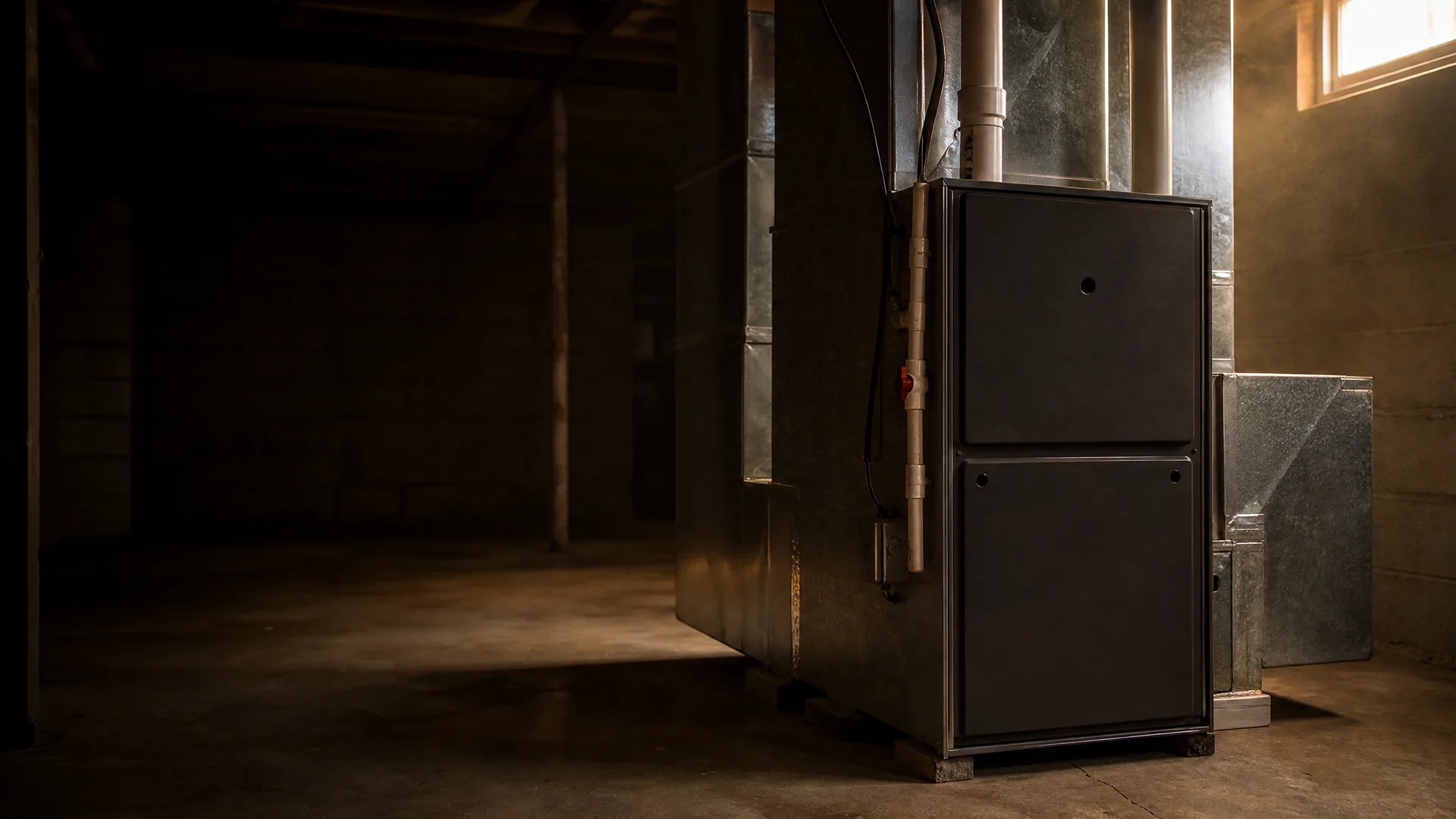
A dark residential basement with a concrete floor and block walls, containing a furnace with two access panels connected to galvanized sheet-metal ductwork and a white vent pipe, lit by a small window at upper right.

It's a little past six and the sky outside the basement window has already gone dark. You went down to get a box off the shelf and the cold caught you first, the kind that tells you the furnace isn't running before you even look at it. It's not. The cabinet is quiet, no hum from the blower, no blue flicker through the little window. A thin haze of dust hangs in the air near the burner compartment, stirred up from the last time it kicked on and off and on again. You stand there a second, coat still on, doing the math on how many times tonight you'll be walking back down these stairs.


A pro who works on furnaces

One request and the search for a pro is handled.

You're not committing to anything by asking.

Why the Flame Sensor Causes Short Cycling

  • The flame sensor sits right in the burner flame and proves to the control board that gas is actually lighting.
  • A thin coat of soot or oxidation on that rod is enough to stop it from reading the flame correctly.
  • When the board can't confirm a flame, it cuts the gas valve as a safety step and tries again shortly after.
  • That restart attempt is why the furnace looks like it's cycling fast instead of just failing once.
  • A pressure switch stuck closed or a draft inducer running slow can trip the same kind of shutdown before the burners even fire.
  • Each of these checks exists so the furnace never keeps burning gas it can't confirm is lit or vented.

The flame sensor is a thin metal rod mounted right next to the burner. Once the gas lights, the rod has to sense that flame and send a signal back to the control board confirming it. That's the only way the board knows it's safe to keep the gas valve open. If the rod picks up a layer of soot, or if it's oxidized from normal use, it can't read the flame the way it should. The board waits for that signal, doesn't get a clean one, and shuts the gas valve as a precaution. A few seconds later it tries again, because as far as the board knows, nothing's actually failed yet. That retry pattern is what makes the furnace look like it's turning on and off over and over instead of just quitting once. The same kind of shutdown can come from a pressure switch that's stuck in the closed position, or a draft inducer motor that's lost speed. Both of those are tied to proving the vent is clear before the burners are allowed to fire at all. None of this is the furnace malfunctioning in a dramatic way. It's a series of safety checks, each one built to stop gas from burning if the furnace can't confirm it's lit, and to stop it from running if the exhaust isn't moving the way it should. A furnace that won't stay on long is usually a furnace doing exactly what it was built to do when something upstream isn't checking out.

An older metal furnace with a louvered front panel stands against a concrete basement wall, connected to sheet-metal ductwork and a flue pipe, with copper and steel pipes running alongside.
Before you get your furnace repair
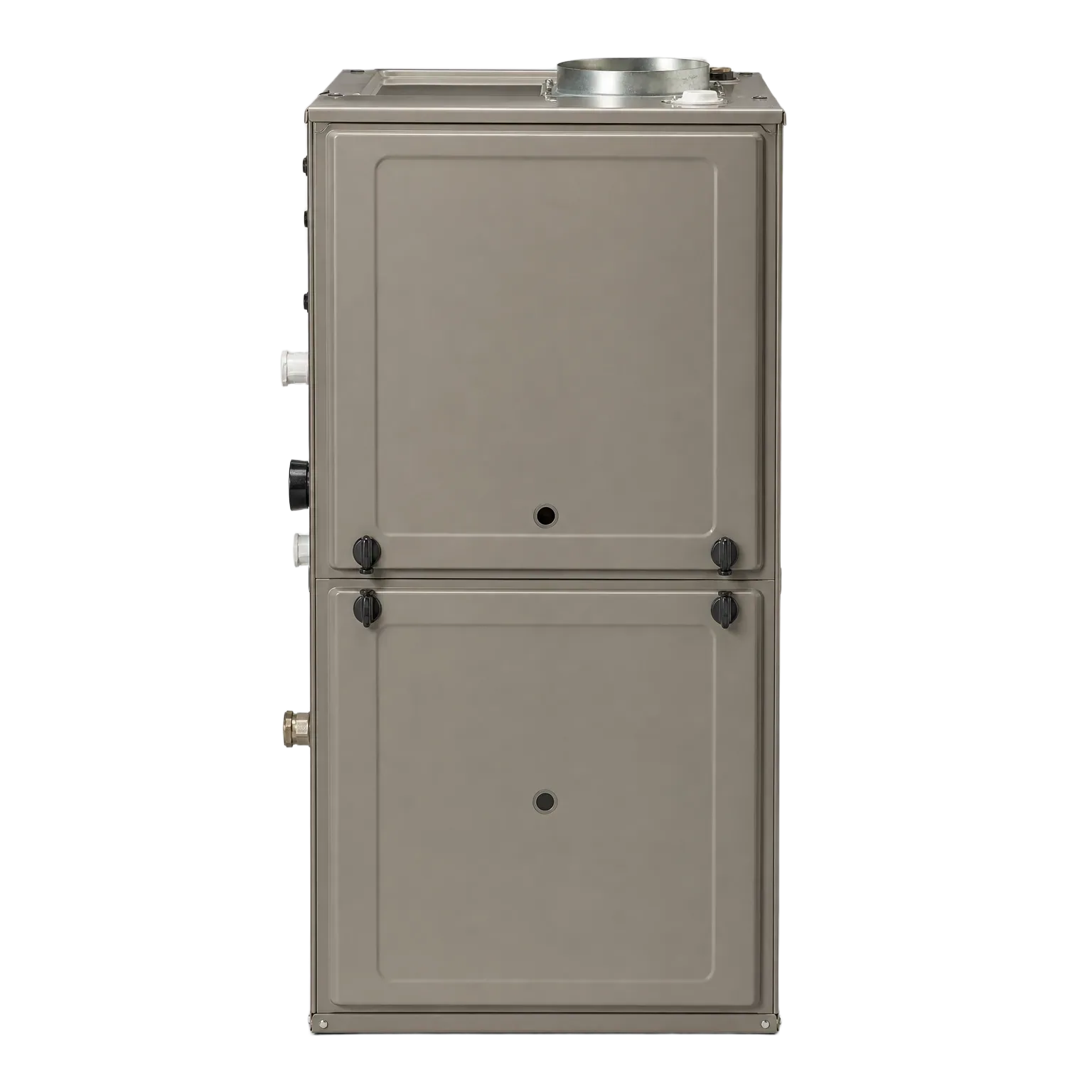
A beige high-efficiency furnace stands on a concrete basement floor beside sheet-metal ductwork, with white PVC vent pipes and a gas line running along an insulated wood-framed wall.
After you get your furnace repair
  1. Thermostat calls for heat and opens the gas valve to start ignition.

  2. Igniter glows or sparks, and burners light inside the heat exchanger.

  3. Blower turns on and pushes air across the exchanger into your ducts.

  4. Flame sensor confirms the burners are lit and keeps the gas valve open.

Winter nights average 23°F statewide

At 23°F, your furnace is running long stretches most winter nights, not just quick bursts. That means more hours for a dirty filter or a failing flame sensor to push it into short-cycling instead of heating the house through.

NOAA nClimDiv 1991-2020 county normals weighted by homes

A gray high-efficiency furnace with white PVC vent pipes stands on a concrete pad in a basement, beside sheet-metal ductwork, copper piping and a poured concrete wall with wood framing at left.

Airflow is doing its job

Air moves freely through a clean filter and open ducts, so the exchanger sheds its heat as fast as the burners add it. The furnace runs its cycle start to finish and shuts off because the house is warm, not because the switch made it stop.

A beige gas furnace in a basement with a metal flue pipe, galvanized sheet-metal ductwork to its left, and gas and water pipes along the concrete wall to its right.

Something's blocking the heat

Rust like this often means condensation that shouldn't be there, or a flue not drafting right. Combined with a clogged filter, the exchanger traps heat with nowhere to go, and the high limit switch cuts the burners before the house warms up.

A woman stands in the open black front door of a white-sided house with a dark shingled roof while a man in a navy jacket approaches along the walkway, with lantern wall lights, a potted shrub, and flowering garden beds nearby.

Short cycling has a reason, and it's one a furnace repair can find

A furnace that keeps shutting off early is telling you something specific. Airflow is restricted somewhere, or the flame sensor can't confirm a flame, and the furnace is protecting itself the way it's built to. That's the whole story. It isn't random, and it isn't something to wait out through another cold night at 23°F.

Once you send the form, you're done chasing down who to call. A contractor who handles this in New Mexico gets matched to your situation and reaches out to you. You don't have to diagnose whether it's the filter, the switch, or the sensor before that happens. You just have to know the furnace is cutting itself short, and that's already clear.

A gray upholstered sofa with a beige cushion and knit blanket beside a curtained window, with a white mug and a book on a dark wooden table in the foreground and a lit lamp in the background.
Interior room corner with sunlight from a window, showing peeling paint and damaged plaster on the wall above a white baseboard, a wooden cabinet with a pale bowl on top, hardwood floor and a patterned rug.
Interior corner of a room with tan walls, white profiled baseboard and window trim, a wood-plank floor in sunlight, and green foliage visible through the window.
An empty room corner with cream walls, white baseboard, two windows with deep sills showing green foliage outside, and a wood plank floor lit by sunlight.
Empty room corner with beige walls, white beadboard wainscoting, chair rail and baseboard, a window with green foliage outside, and sunlight casting leaf shadows on the wall above a wood floor.
Sunlit room corner with a multi-pane window, beige walls, white baseboard, wood floor with a woven rug, and a dark wooden cabinet holding a ceramic table lamp below a framed picture.

Get your furnace to the right pro

Send it once and finding someone is no longer on you.

Get a local pro

It costs nothing to send, and you don't have to hire anyone.