
Before you get your furnace repair
You're calling around New Mexico for someone who answers, explaining the bang over and over, and weighing quotes against each other while the furnace keeps cycling on.
 I'm done searching
Send the request today and stop worrying about who to call.
A bang when your furnace kicks on is usually gas building up in the burner chamber before it lights, then catching all at once. It can also be ductwork popping as the metal heats and expands. Either way, it is not something to leave alone through a New Mexico winter.
A delayed ignition gets worse. Each small explosion puts stress on the heat exchanger, and a cracked heat exchanger is a safety problem, not just a noisy one. The banging you hear now is the furnace telling you something is already wrong with how it lights.
You could start calling around, but most heating companies in New Mexico get busy as soon as the cold sets in, and you would be the one explaining the noise, the timing, the model of your furnace, over and over to whoever picks up. Then comparing quotes, checking licenses, deciding who actually shows up when they say they will.
Send the form instead and that work is off your plate. You describe the noise once. No more calling around, no more repeating yourself to a different voice each time, no more guessing whether the quote in front of you is fair. A licensed contractor familiar with gas furnaces gets the details and takes it from there.
That does not mean the repair itself is simple or quick. It might be a dirty burner, a misaligned igniter, or something in the ductwork that needs a closer look. What it means is that finding someone qualified to look at it stops being something you have to manage yourself.
Your furnace is going to run for months yet. The noise will not fix itself, and it will not get quieter on its own. Send the details below and let someone who works on these every day figure out what your furnace is telling you.
You hear it every time the furnace starts up this winter, a bang right as it kicks on. It is loud enough that you went looking for what causes it before it gets worse. You already check on small problems rather than let them sit, and a noise like this feels worth running down now, in a New Mexico winter, rather than waiting to see if it happens again.
Gas furnaces light a burner each time the thermostat calls for heat. If the igniter is weak or dirty, gas can build up for a second or two before it catches, and when it does catch, it catches all at once instead of lighting smoothly. That is the bang. A furnace that starts this way once might do it every time the thermostat calls for heat for the rest of the winter, and the delay tends to get longer as the igniter wears down further. It is a repair a licensed contractor handles by checking the igniter and the burner assembly, not something that clears up on its own.

A clean burner lights within a second or two of the gas valve opening. Once dust or a weak igniter slows that down, gas has time to pool in the chamber before it catches, and the bang gets louder each time it happens. A furnace that bangs lightly in November and harder by January is telling you the delay is growing, not staying the same.

Sheet metal ducts expand as hot air moves through them and contract again once the burner shuts off. A single pop or tick as that happens is normal and has nothing to do with the burner. What is not normal is a bang loud enough to hear from another room, or one that lines up with the furnace kicking on rather than the duct cooling down afterward.

Every delayed ignition puts a small shock through the burner chamber and the heat exchanger bolted next to it. One bang now and then is a warning. A bang every time the furnace cycles on, all winter, is metal fatigue adding up in a part that is not cheap to replace and matters for keeping exhaust out of your house. You will likely notice the cycles get shorter before the noise gets louder, since a furnace working around a bad igniter or a dirty burner tends to shut off early too.
Finding out who can look at it is the part you can skip. Instead of searching for a furnace repair contractor in New Mexico, calling a few, explaining the banging to each one, and sorting through different quotes, you send the details once. From there, getting matched with someone qualified is no longer something you have to manage yourself.





Describe what your furnace is doing once, in one form.
It costs nothing to send, and you don't have to hire anyone.
A delayed ignition bang comes from the same spot every time, right at the burner chamber, sharp and close. It happens the moment the furnace lights, not before and not after. Gas has pooled for a second or two before catching, so the sound is quick and hard. If you crack open the panel, you would see the burner right there behind it. This one does not move around the house. It is tied to ignition itself, so it fires every single cycle, which is why it wears on the heat exchanger faster than the other kind. New Mexico winters can mean a furnace cycling on and off for hours overnight, and each one of those cycles is another hit.
Duct popping sounds different. It comes from the metal ductwork expanding as warm air moves through it, so you hear it somewhere down the line, not right at the furnace. It can be a single tick or a series of them as different sections heat up, and it often shows up a minute or two after the burner has already lit, not at the exact moment of ignition. It is also inconsistent. Some cycles pop, some don't, depending on how cold that stretch of duct got between runs. It is annoying but it is not putting stress on the burner chamber or the heat exchanger the way a delayed ignition does.


You're calling around New Mexico for someone who answers, explaining the bang over and over, and weighing quotes against each other while the furnace keeps cycling on.
The search for someone to look at it is done. A licensed contractor takes it from here, and that bang stops being something you track through the winter.
You notice it most on the cold mornings, when the furnace has been off for a few hours and kicks on hard. The bang is sharp, it rattles the vent cover or the duct nearby, and it happens right at the start of the cycle, not partway through. Some nights it is louder than others. You might catch a faint gas smell for a second right before it lights, or notice the burner takes a beat longer to catch than it used to. Left alone, that delay tends to get worse, not better, and it is putting stress on the heat exchanger every time it happens, cycle after cycle, all winter.
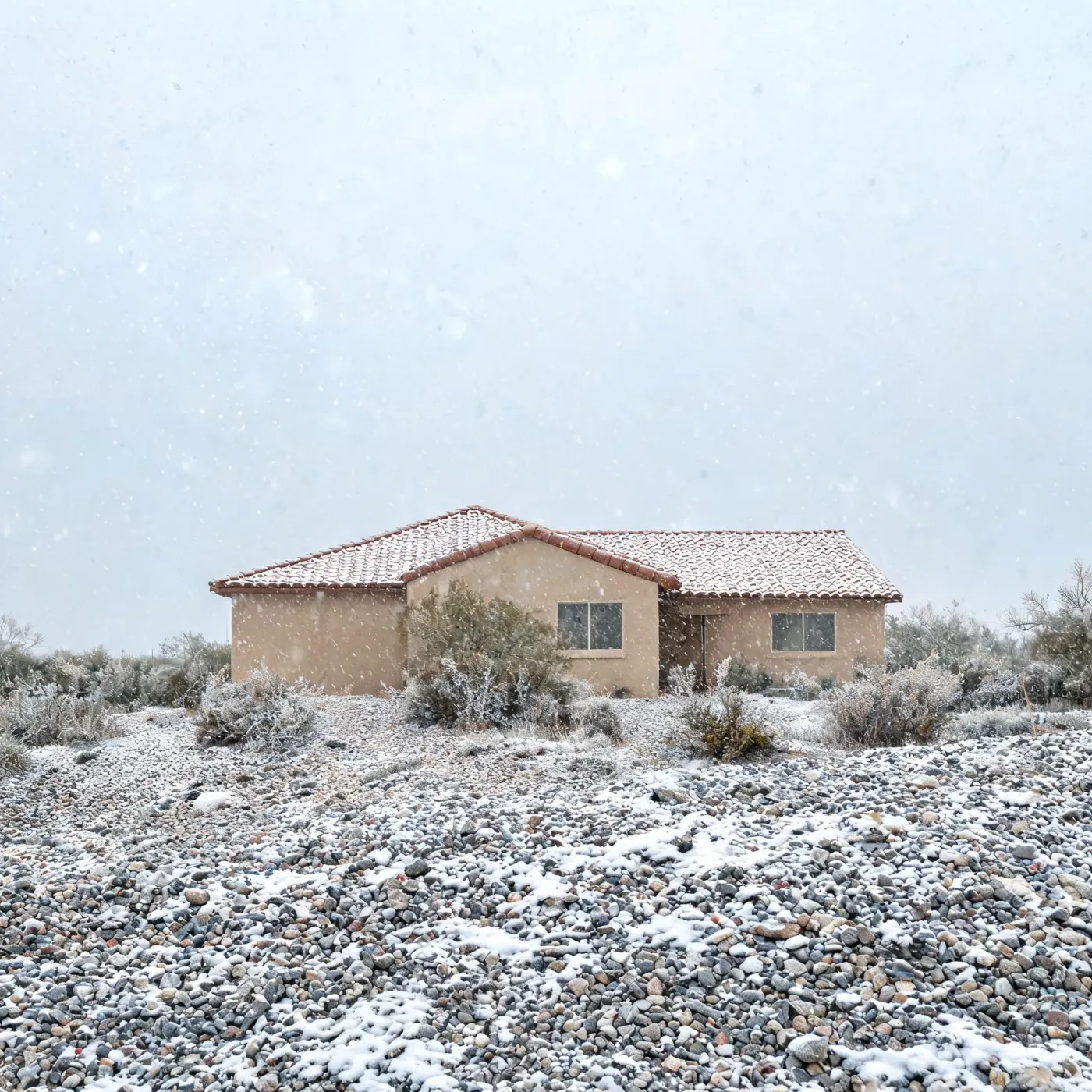
Statewide, winter nights average 23°F, according to NOAA climate data. That kind of cold means your furnace is starting from a full stop most mornings, not just cycling a little heat into air that's already warm. The burner chamber and the metal ductwork around it are cold too, so when the gas lights, everything it touches has further to expand. A delayed ignition bang is louder on those cold starts than it is on a mild afternoon, because there's more gas pooling and more cold metal to shock. If your mornings here start around freezing, that's the bang you're hearing hardest.
NOAA nClimDiv 1991-2020 county normals weighted by homes

This is a clean start. The gas valve opens, the igniter fires, and the burner catches right away. No pooled gas, no delay, no bang at the chamber. The ductwork beside it carries the heat off quietly once the furnace is running.

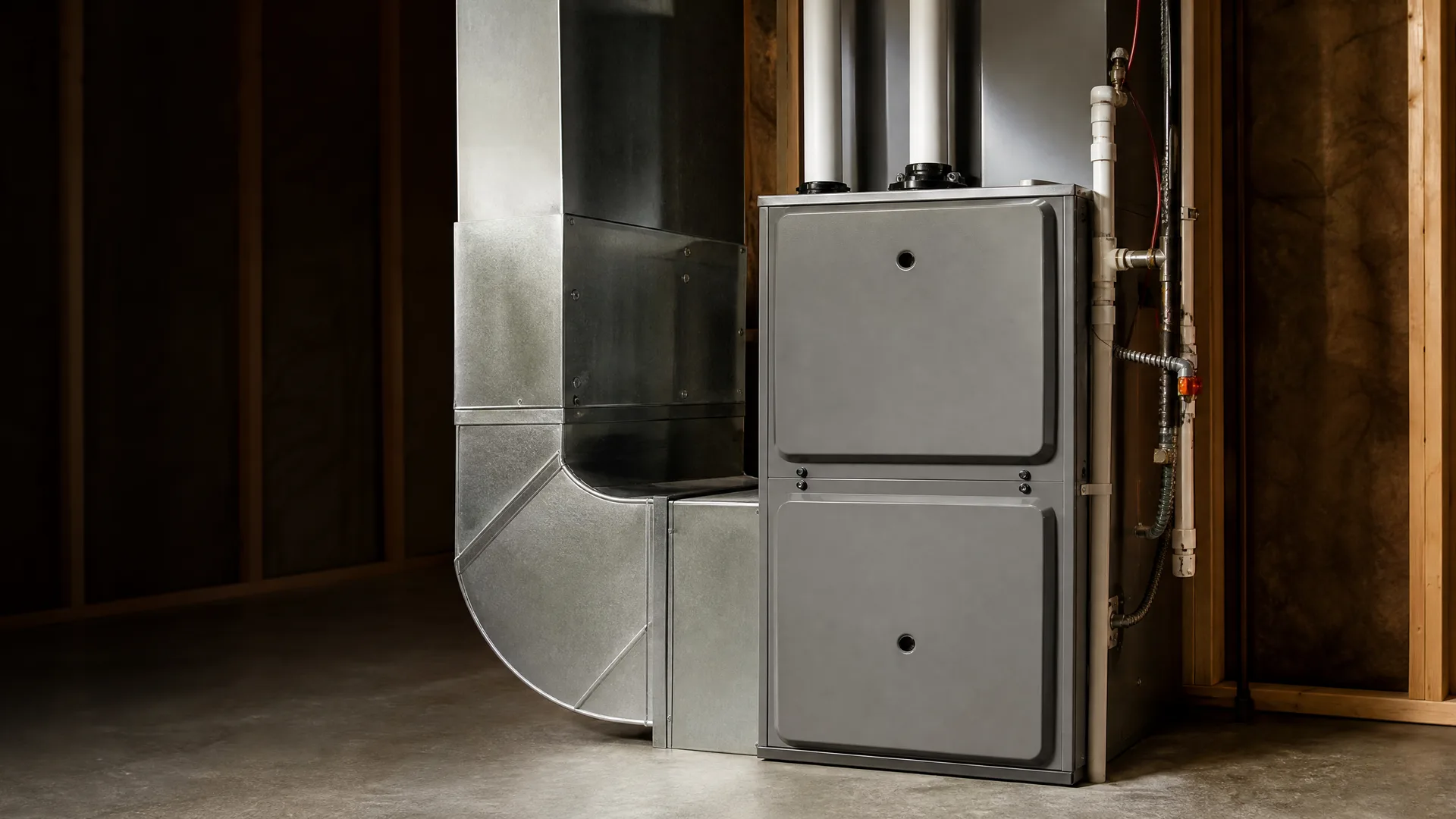
This is an older unit with the same basic layout, cabinet, flue pipe, gas line, duct run. If the igniter has weakened or dust has built up around the burner, gas has a moment to gather before it catches, and that's the bang you're hearing on cold mornings.
At 23°F overnight, your furnace is firing up from a cold start most mornings all winter, not easing into a warm house. Every one of those cold starts is another chance for gas to pool before the burner catches, which is exactly when that bang happens.
NOAA nClimDiv 1991-2020 county normals weighted by homes


The bang when your furnace kicks on is a delayed ignition, gas pooling in the burner chamber for a second or two before it catches, or it's ductwork popping as the metal heats. Either way, it happens the same way every cold morning, and it is not wearing out on its own. What you do with that is the only thing left to decide. You could keep searching New Mexico for someone who answers the phone, explain the bang again to the next contractor, and sit with quotes trying to compare them against each other while the furnace keeps cycling on through the cold. Or you could send this once and let that part of it be done. The bang itself still needs a burner chamber looked at and an igniter checked, and that takes a visit either way. But the part where you hunt for who to call, that part ends the moment you send the form. You already catch small problems before they turn into bigger ones. This is one of those.
Hand off the search today