
Why your furnace smells like burning in New Mexico

Step 1 of 3: Equipment

Why does my furnace smell like it's burning?

A burning smell from the furnace is unsettling, especially the first time the heat kicks on for the season. You want to know if this is normal dust burning off or something wrong enough to shut the system down and get looked at.

Usually dust burning off the heat exchanger, but not always

A furnace that sat unused since last winter collects dust on the burners and heat exchanger. The first few times it fires, that dust burns off and the smell fades within an hour. If it doesn't fade, or if it smells sharp and electrical rather than like dust, something inside is overheating. A cracked heat exchanger, a dirty burner, or a motor working harder than it should can all cause that smell to linger. Gas furnaces are common in New Mexico homes, and the ones that run for a full winter season see this more than ones that cycle on and off a handful of times. If the smell doesn't clear or keeps coming back, that's a reason to have it checked rather than wait it out.

A beige high-efficiency furnace in an unfinished basement, with white PVC vent pipes, a yellow gas line, metal ductwork, and exposed wood framing on a concrete floor.

A normal startup smell

The first time your furnace runs after sitting all summer, dust on the burners and heat exchanger burns off. Expect a faint, dry smell for ten or fifteen minutes, then nothing. The air through the vents clears and the furnace runs the rest of the night without any odor at all.


An older beige furnace with two louvered vent panels stands on a concrete basement floor, connected to galvanized ductwork and a metal flue pipe, with gas piping and flexible conduit on the wall behind.

A smell that stays

If the smell lingers past that first cycle, or comes back every time the furnace kicks on, something inside is burning that shouldn't be. A cracked heat exchanger, a frayed wire, or dust built up deep in an older unit can all cause it. That calls for a licensed tech, not a wait and see.

A gray-haired man in a dark sweater sits on a light gray sofa in a living room, looking toward a sunlit window with trees outside.
A gray-haired man in a dark blue sweater sits on a light gray sofa in a sunlit living room, looking off to the side, with a potted plant, shelving unit, and large glass doors behind him.
A bearded man with graying hair in a dark green sweater sits on a sofa in a living room, looking off to the side, with a sliding glass door and a dim kitchen doorway behind him.
A gray-haired man in a dark knit sweater sits on a light gray sofa in a living room, looking toward a sunlit window, with houseplants, a lamp, and framed art in the background.

A smell that doesn't fade

If the burning smell lasts past the first cycle or returns every time the furnace kicks on, something inside is overheating. A licensed tech can find out what before it fails on a cold night.

Connect with a pro

Gas heat, no second guessing

Most homes in New Mexico run gas furnaces, and a bad smell near a gas appliance isn't something to wait out. A local contractor who works on these systems all winter knows what to check first.

Connect with a pro

Normal Dust Smell or a Repair Call

Smell fades on its own

  • Lasts ten to fifteen minutes on the first cold morning you run the heat, then stops for good that season.
  • Smells dry and dusty, not sharp or like melting plastic.
  • Comes only from the burners and heat exchanger where dust settles over the summer.
  • No smoke, no soot on the vent covers, no change in how the furnace sounds.
  • Doesn't return on the next cycle once the furnace has run through once.

Smell means a repair call

  • Shows up again every time the furnace kicks on, not just the first run of the season.
  • Smells sharp, like melting plastic or hot metal, instead of dust.
  • Comes with soot near the vents or a scorched smell that wasn't there before.
  • Paired with a furnace that short cycles or shuts off on its own.
  • A cracked heat exchanger or a failing blower motor can cause this, and neither should wait.
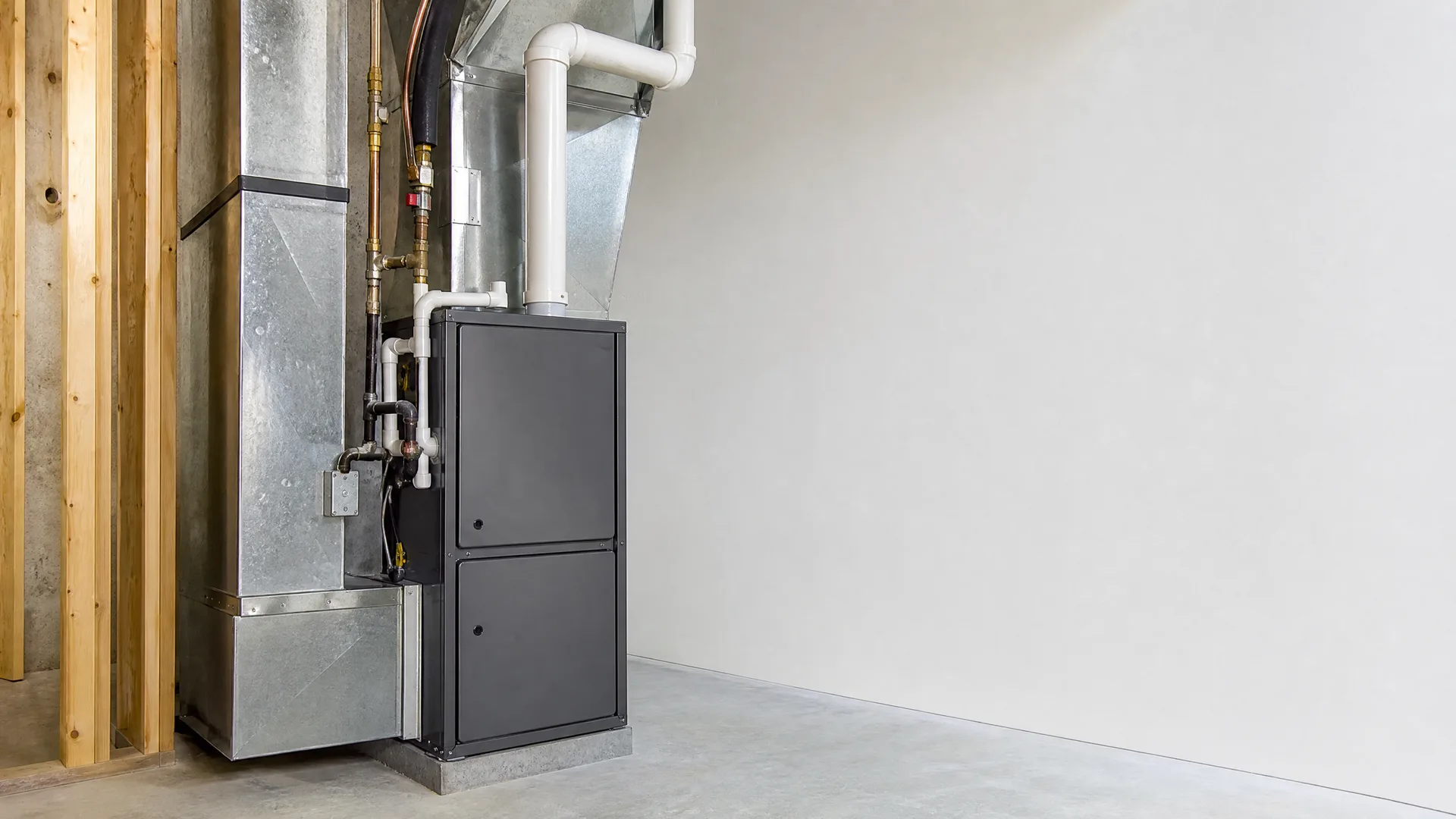
A dark gray furnace connected to galvanized sheet-metal ductwork, white PVC vent pipes and copper piping, standing against a plain light wall in a room with a bare concrete floor and exposed wood framing at left.

The smell drifting through your house

New Mexico homes run gas furnaces because winter nights get cold enough to need them, and when something inside is off, that smell doesn't stay by the furnace. It travels through the ducts into the bedroom, the kitchen, wherever a vent sits. A sharp or plastic smell reaching rooms far from the furnace closet is a sign to shut the system off and get someone qualified to look at it before you run it again.

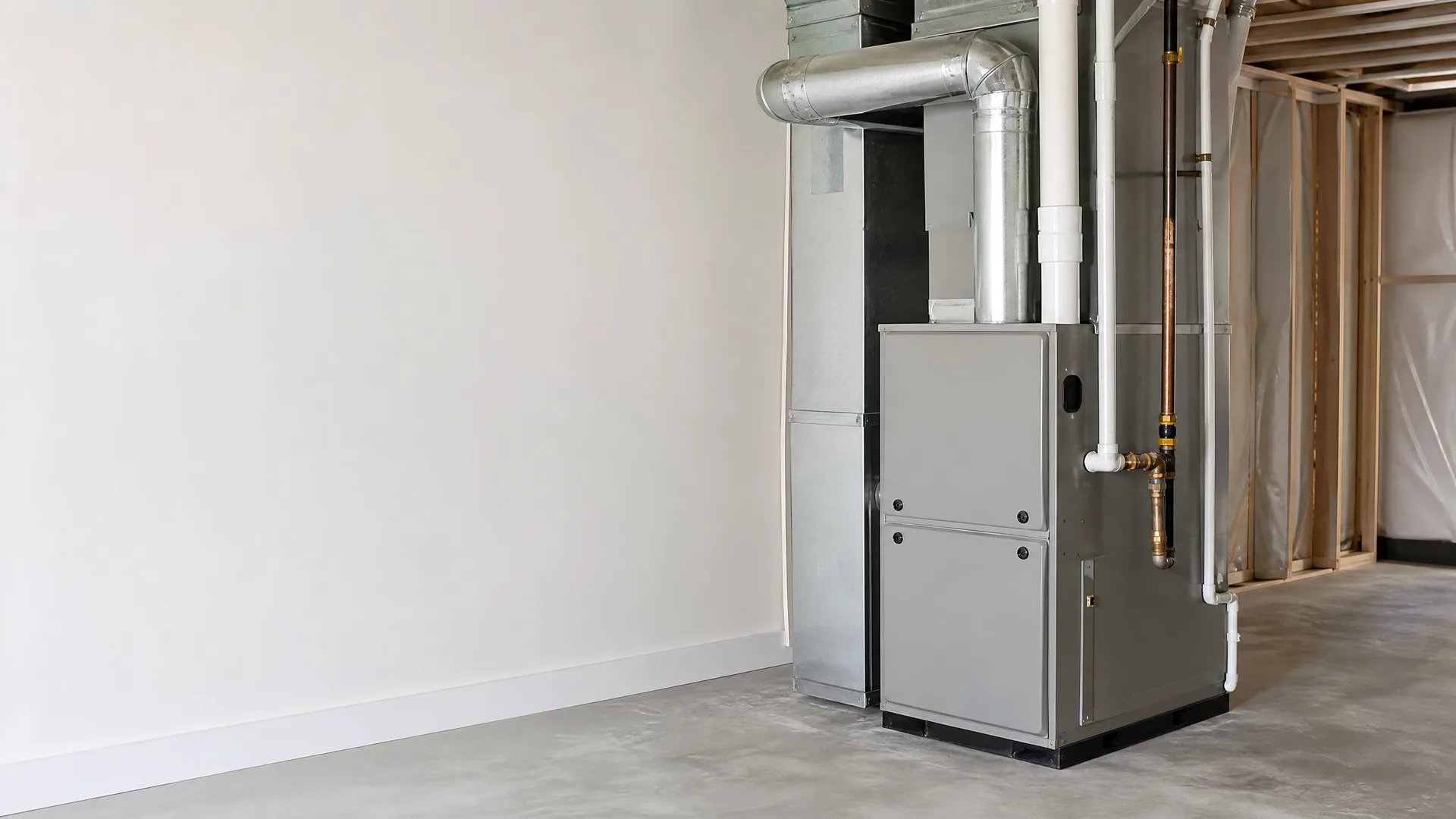
A gray high-efficiency furnace with sheet-metal ductwork, white PVC vent pipes and copper piping stands against a wall in an unfinished basement with a concrete floor and insulated wood stud framing at right.

What a cracked exchanger risks

A furnace that keeps smelling wrong past that first startup cycle can mean a cracked heat exchanger, a clogged burner, or wiring insulation overheating against a hot surface. None of those fix themselves, and running the furnace while one of them sits unresolved risks carbon monoxide reaching your living space. A local tech who works on furnaces all winter here knows which of these is most likely and can rule out the dangerous one first.

Is this smell normal, or is something wrong

Walk through the house with your nose and you'll know a lot already. A dry, dusty smell that shows up once, when the heat first kicks on for the season, and fades inside of fifteen minutes is the furnace burning off what settled on the burners since spring. A smell that keeps coming back every cycle, or one that's sharper, like hot metal or melting plastic, is different. You might notice it strongest near the vents in the bedroom or living room, not just by the furnace itself, because it's moving through the same ducts as the heat. Left alone, whatever's causing that smell keeps running hot every time the furnace fires, and a furnace that overheats on a cold night is one that can shut itself off and leave you without heat until it's looked at.

A gray high-efficiency furnace in a basement, connected to sheet-metal ductwork on the left and white PVC vent pipes above, with black gas and drain piping and an exposed wood-stud wall with OSB sheathing on the right.

Running clean

A furnace like this fires evenly and the air coming off the ducts stays steady. The gas lines and vent pipes are tight, the burners light without a delay, and there's nothing for a burning smell to hang on past that first startup.

An older gas furnace with two louvered front panels stands on a concrete basement floor beside galvanized sheet-metal ductwork, pipes, and a weathered concrete wall.

Running into trouble

An older furnace like this has had more years for dust and rust to build up inside the burner compartment and heat exchanger. Moisture on the walls nearby is worth a look too. A licensed tech who works on these units every winter will know where to check first.

A gray sheet-metal furnace with flue pipe and adjacent ductwork stands against a stone basement wall on a concrete floor, with white PVC and metal pipes running nearby.
Before you get your furnace repair
A gray high-efficiency furnace with white PVC vent pipes stands against a concrete basement wall beside sheet-metal ductwork, a small condensate pump on the floor, and exposed wood framing at left.
After you get your furnace repair
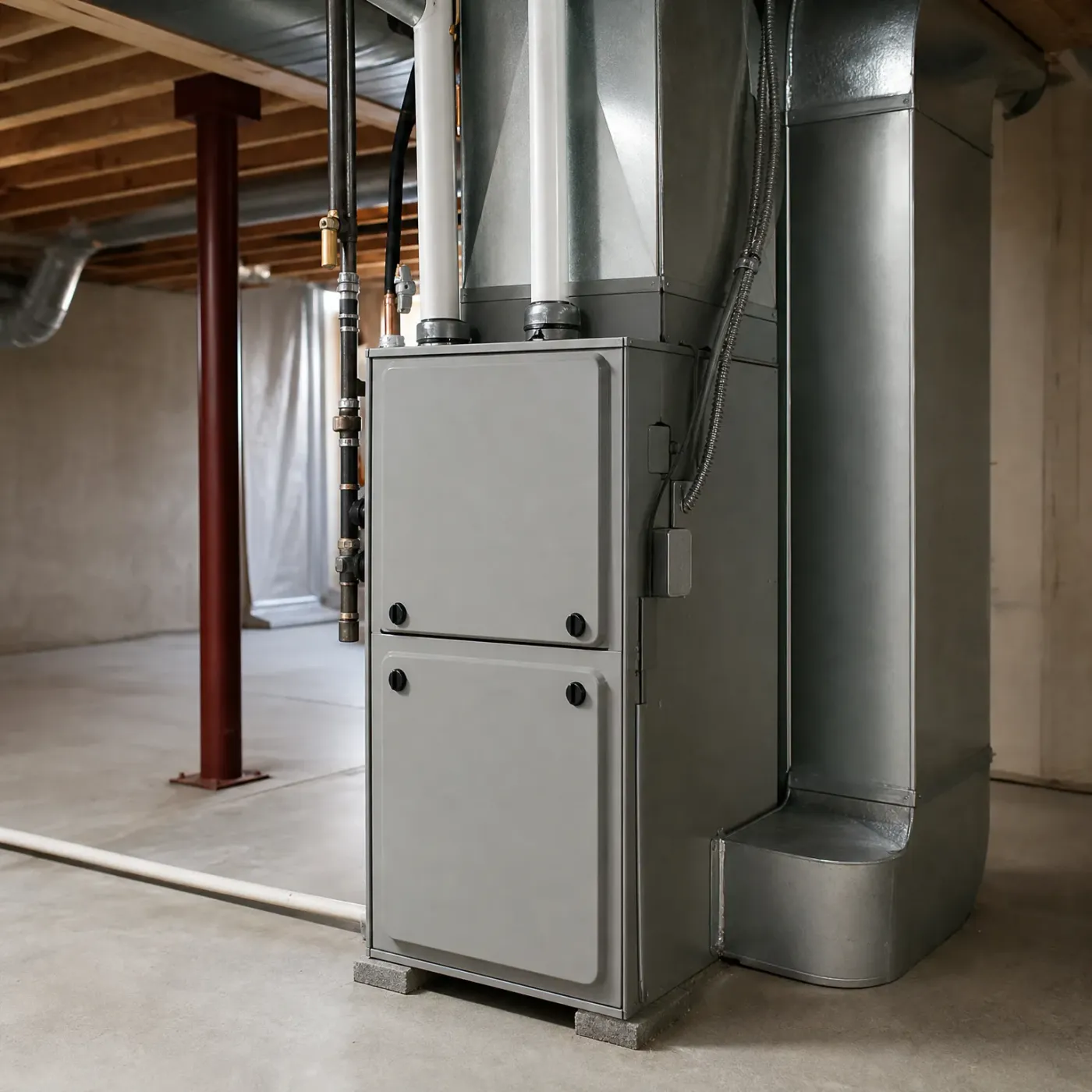
A gray high-efficiency furnace with two access panels stands on blocks in a basement, connected to sheet-metal ductwork, PVC vent pipes, flexible conduit, and gas and water piping, beside a red support column and exposed wood joists.

Matched to your furnace job

Your request goes to one pro, not a list of companies.

A local pro who knows furnaces gets your details and gets in touch.

Find a pro near me

No charge to send it. You decide if you hire them.

A woman with shoulder-length dark brown hair in a cream knit cardigan sits in an upholstered armchair beside a window, looking off to the side, with a white bookshelf and potted plant blurred behind her.
A woman with dark hair in a bun sits wrapped in a chunky knit blanket on a couch with a child resting his head on her shoulder, eyes closed, beside a lit lamp and bookshelf indoors.

Before you get your furnace repair

Right now you're left guessing every time the heat kicks on. Is that smell the usual dust burning off, or is it the cracked heat exchanger or failing igniter you read about online. You keep a window cracked near the furnace closet just in case, and you hesitate before running the heat on the coldest nights, which is exactly when you need it most in New Mexico. Without someone looking at the burners, the flame sensor and the heat exchanger directly, you're stuck choosing between living with a smell that might be nothing, or shutting the furnace down and going without heat while you figure out if it's safe to run.

After you get your furnace repair

A licensed tech who works on furnaces all winter in New Mexico can tell you in minutes whether that smell was dust or something failing inside the cabinet. If it's a part overheating, you'll know which one and what it takes to fix it, rather than guessing from the kitchen table. You get matched with one contractor local to you, not a handful of companies calling at once, so the person who shows up already knows the kind of furnace you have and what tends to go wrong with it this time of year. Run the heat again without wondering if the smell is going to come back.

Winter nights average 23°F statewide

Winter nights here average 23°F, so your furnace isn't running once or twice to take the chill off. It's cycling on and off most of the night for months. That first-run smell should clear fast and stay gone, because this thing has a long season ahead of it.

NOAA nClimDiv 1991-2020 county normals weighted by homes

A gray gas furnace stands on a concrete basement floor, connected to sheet-metal ductwork, white PVC vent pipes, and a yellow gas line, with plastic sheeting covering the walls.
A furnace installed clean, with tight gas and exhaust lines feeding a system that still has its whole life ahead of it.
A metal furnace with louvered panels stands against a concrete basement wall, connected to sheet-metal ductwork and a round flue pipe, with wooden framing posts and a pipe nearby.
An older furnace coated in dust, the kind that's logged enough winters for small problems to turn into real ones.
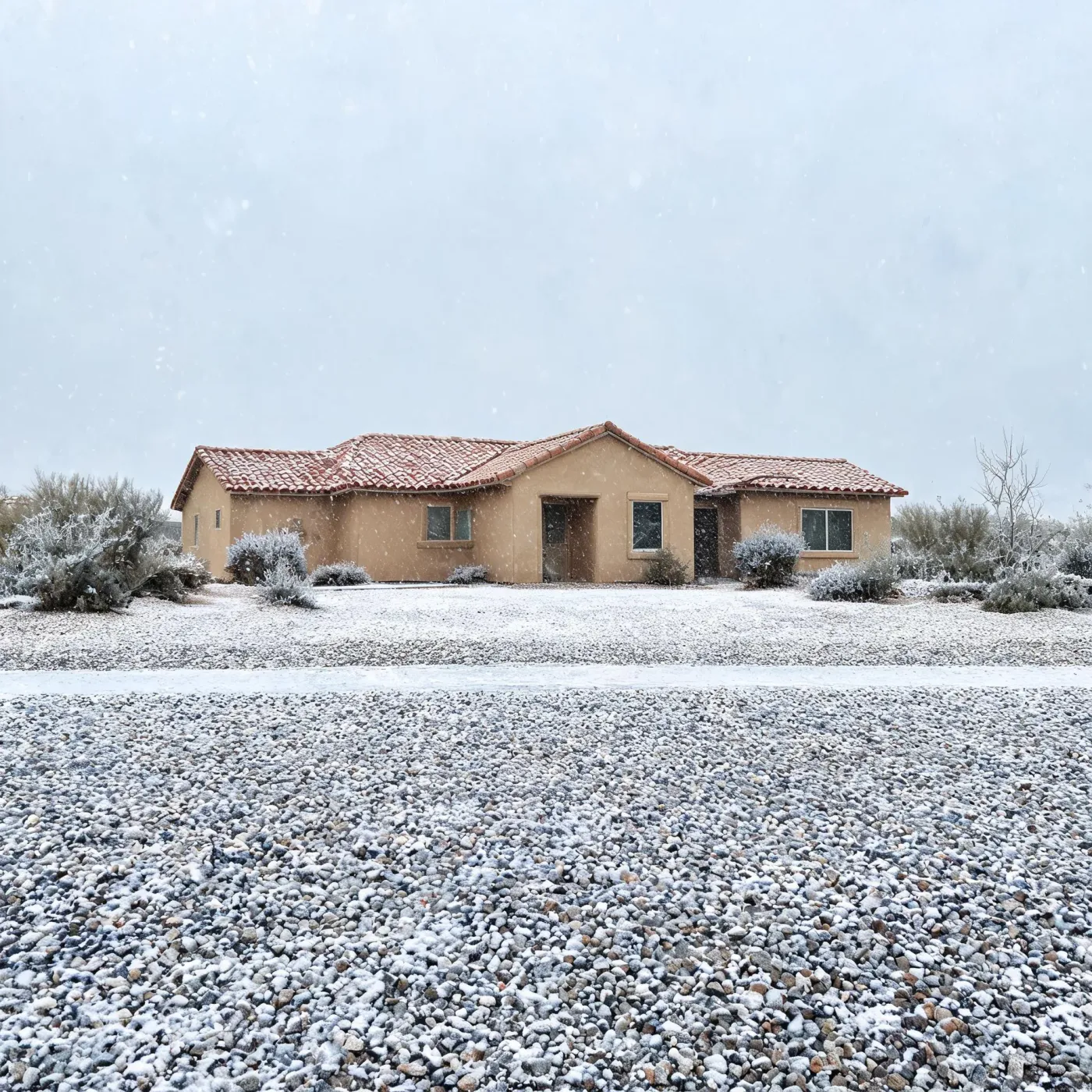
A single-story tan stucco house with a red tile roof behind a gravel yard and low desert shrubs, all lightly covered in snow under an overcast sky.

New Mexico winter nights average 23°F statewide, per NOAA. That's cold enough that your furnace isn't cycling once to knock off a chill, it's running most of the night, every night, from the first freeze through spring. A furnace working that hard needs its burners and heat exchanger clean and its gas line sealed tight. Dust that burns off on the first cold night should clear in fifteen minutes and not come back. If a burning smell keeps showing up as the nights stay in the 20s, something inside is working against itself every time the heat kicks on, not just once at the start of the season.

NOAA nClimDiv 1991-2020 county normals weighted by homes

A faint dusty smell that clears in fifteen minutes is nothing to worry about. One that lingers, sharpens, or comes back every time the furnace kicks on means something inside needs a look before the cold really sets in. You don't have to figure out which part it is. A licensed New Mexico contractor who works on furnaces all winter, every winter, has smelled this before and knows what usually causes it, whether that's a dirty burner, a failing igniter, or something tied to the heat exchanger. You'll be matched with one contractor local to you, not a handful of companies competing for the job, so you can talk through what you're smelling with someone who'll actually show up and fix it. Winter nights here get cold enough that your furnace runs for months without much of a break. Worth knowing what that smell is before it has to.

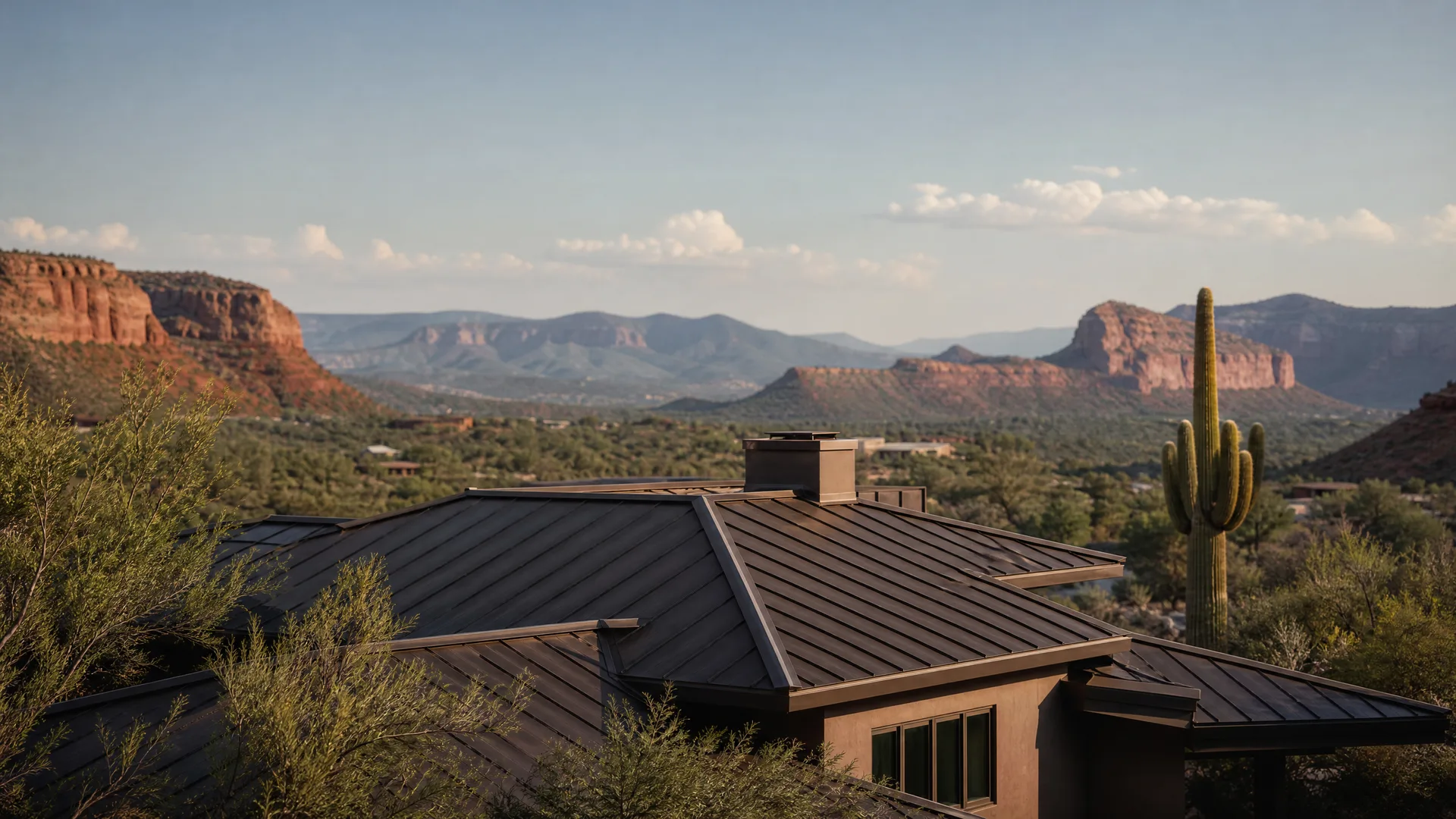
A dark standing-seam metal roof on a stucco house in the foreground, with desert scrub, a tall saguaro cactus, and red rock mesas and hills under a partly cloudy sky in the background.

A furnace pro near you

Get my match

There's no charge for the request.

A furnace that's cycling on and off most of the night through a New Mexico winter doesn't get many quiet moments for someone to check it over. Getting a burning smell looked at now, before the next hard freeze, means a licensed tech who works on these systems every winter can tell you what's actually going on while there's still time to fix it.